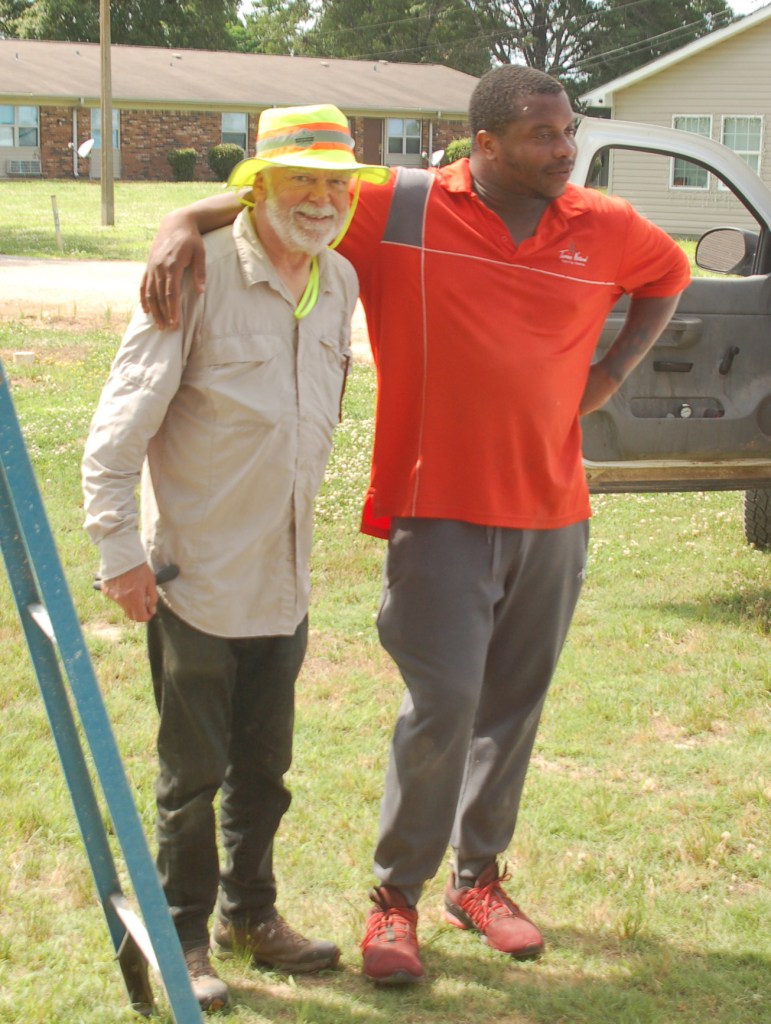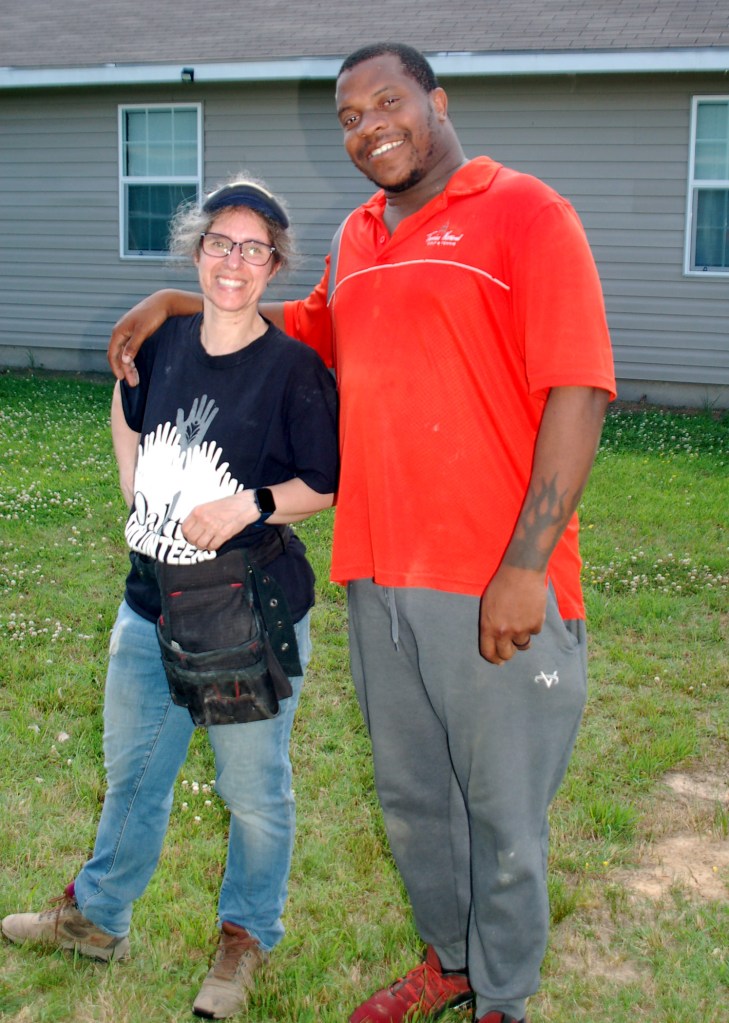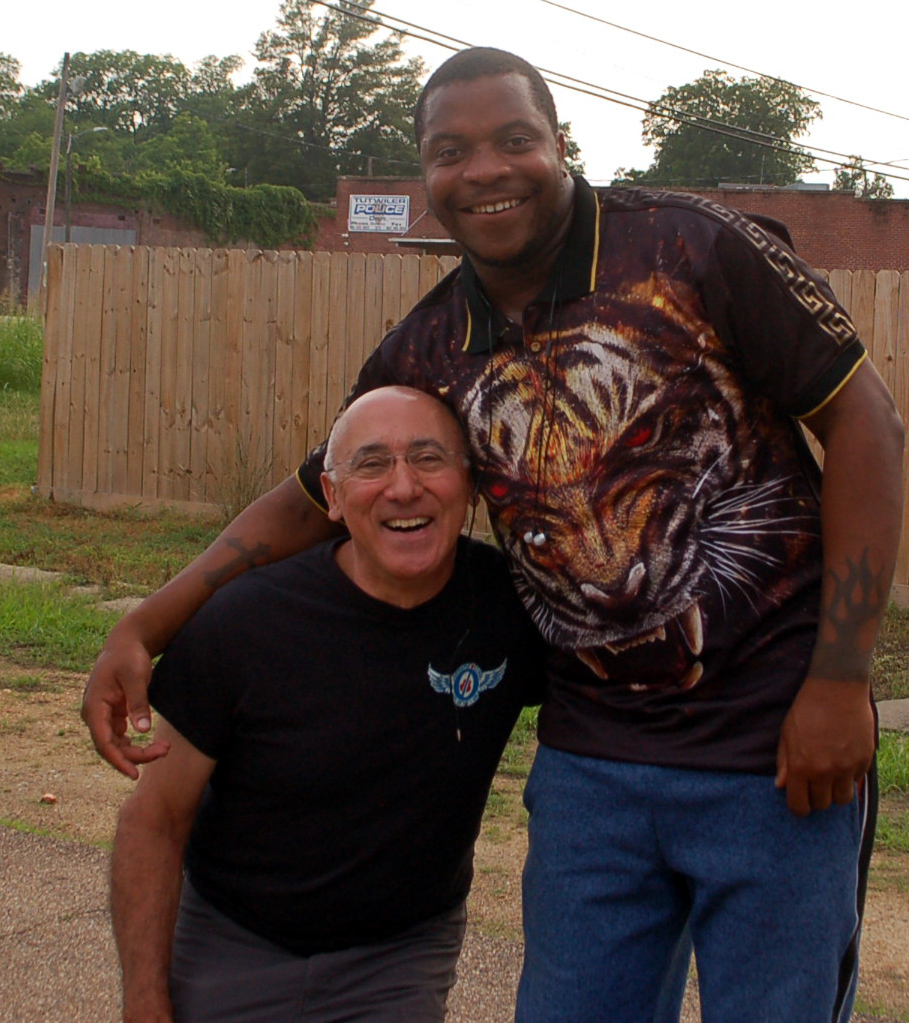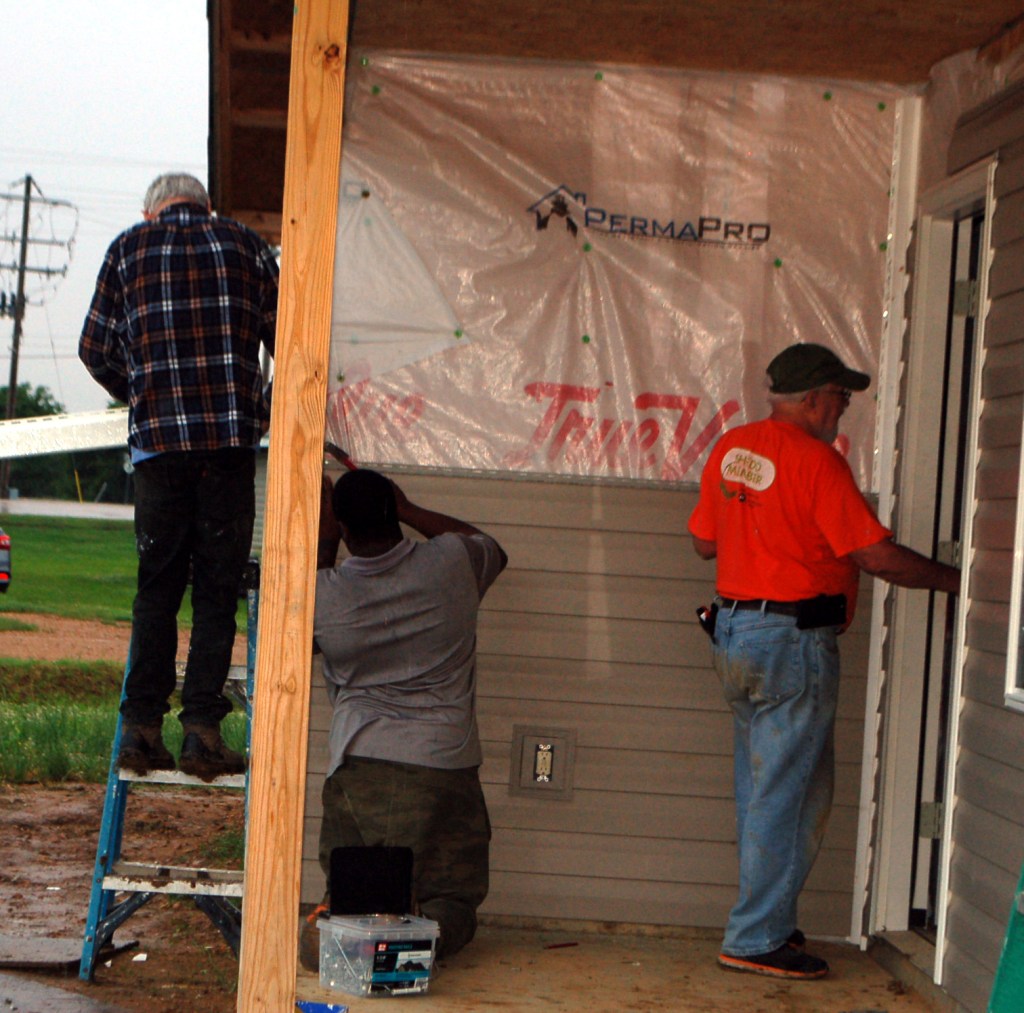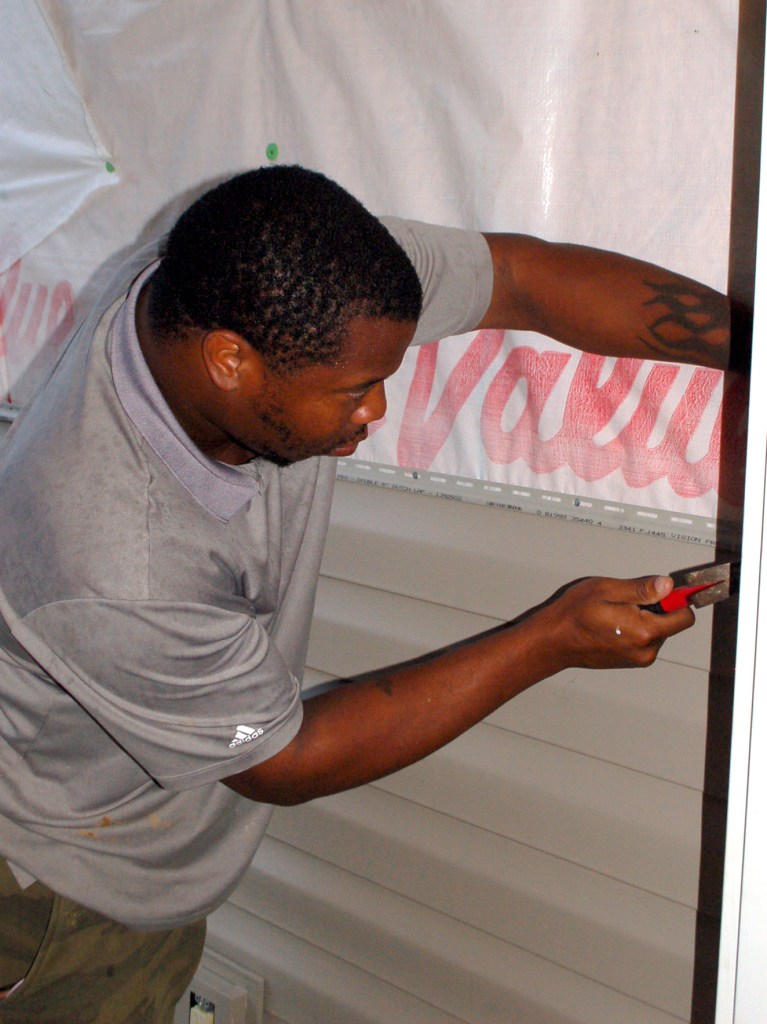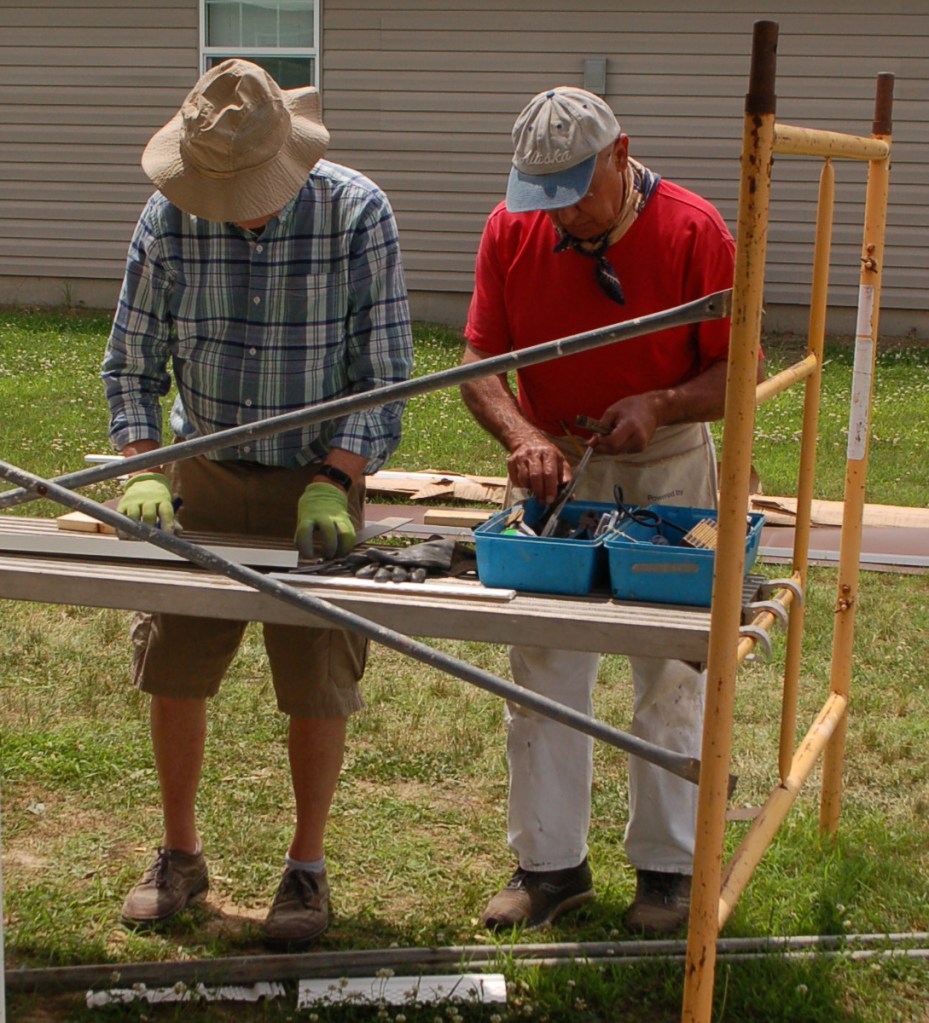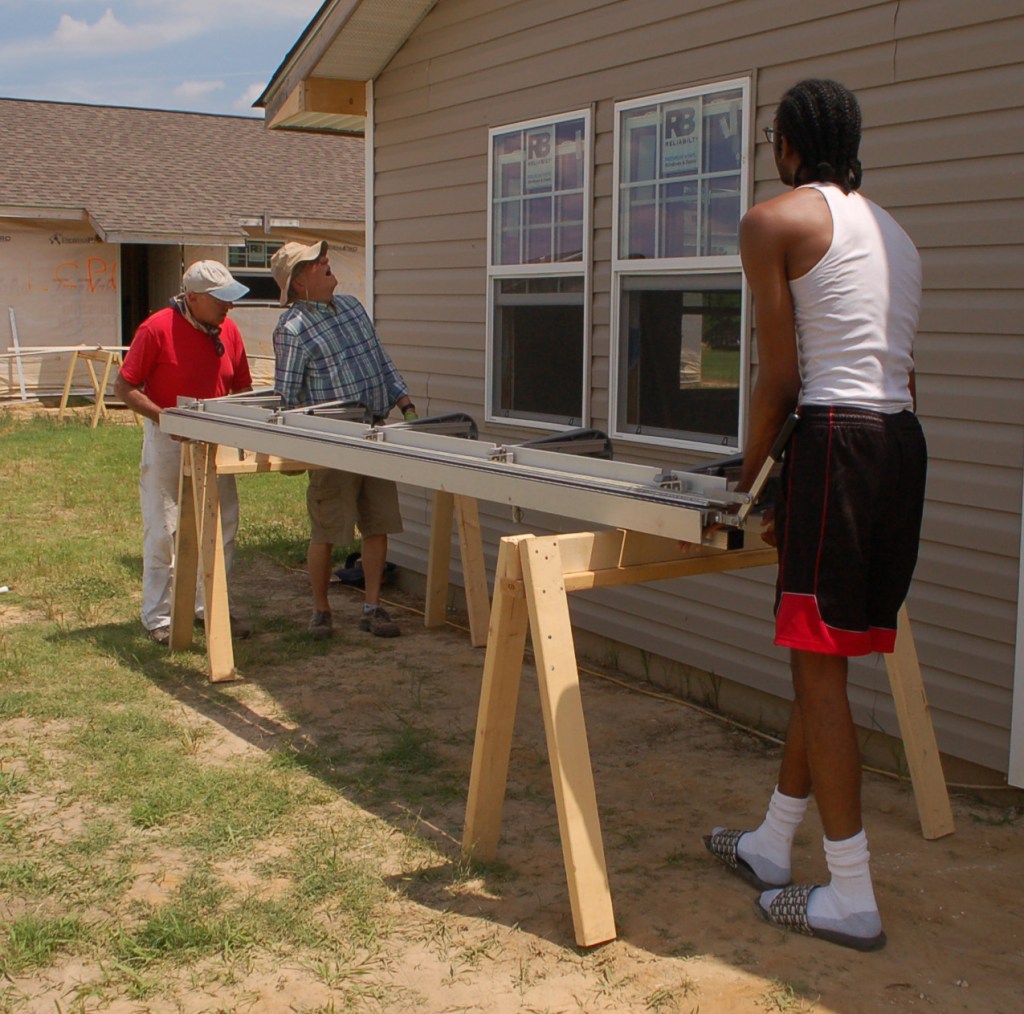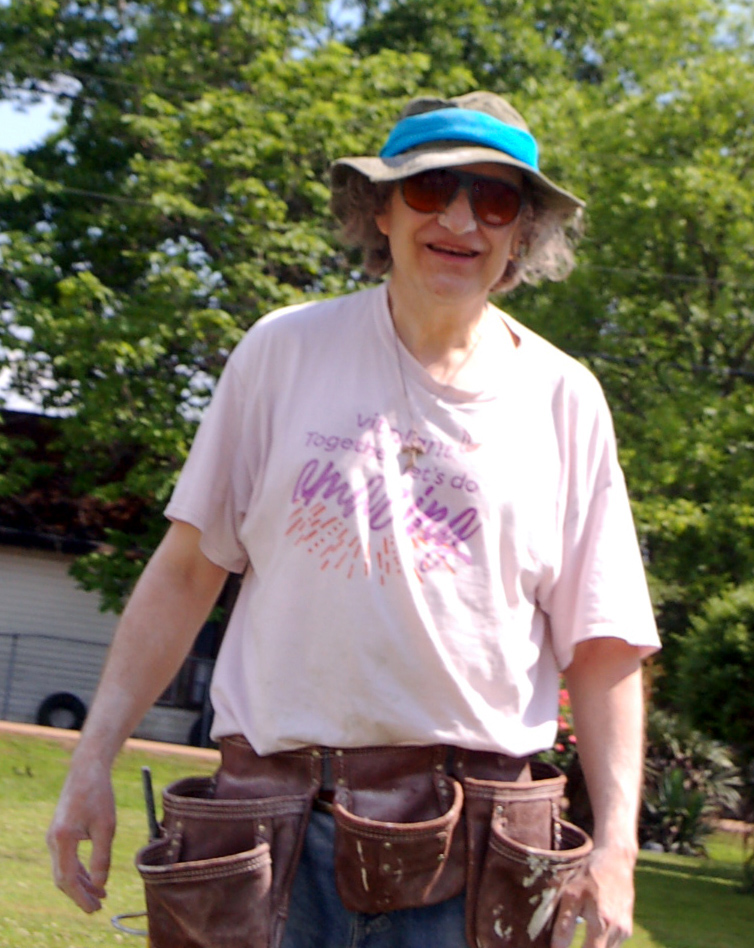
Jon wanted to know how many years Lorenzo has been working with us, so I asked him. He had no idea. I first met Lorenzo my first year down. JD brought him by the site and Dino in particular was thrilled to see him. He showed up every year since, getting bigger and more confident and comfortable to us every year.
At this point, Lorenzo has each of our numbers on his phone and looks forward to our arrival each year.
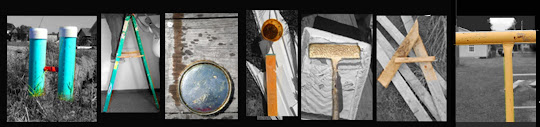
Lorenzo is a part of the team that we can rely on being here every year. He works with us, shares meals, signs the plaque at the end of the week, and usually appears in our group photo. He stuck around to get in the picture this year and would still be here watching us pack up, but he wanted to hurry home before the rain started.
He might make it over tomorrow to see us off, but whether he can make it or not, he will expect us to text him when we get home to assure him we made it safely. The world is a better place for him and for us because of our friendship.
A few of us went to the clinic for a tour. Well, it was not much of a tour. Cindy the office manager showed us a few rooms and then regaled us for an hour or so with stories of Sister Anne.
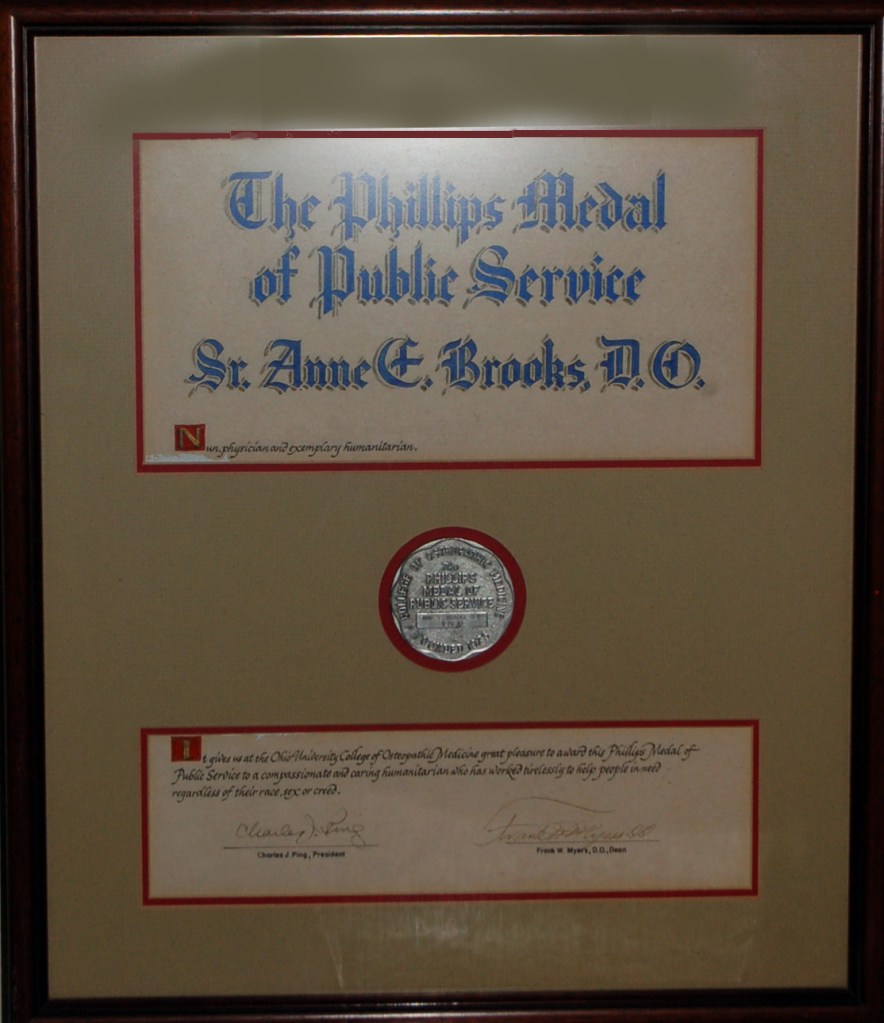
Just about everything we are doing and that most anybody is doing around here began when Dr. Sr. Anne Brooks, DO, SNJM came down to the clinic. Sister Anne’s story began well before she entered medical school at the age of 40 or so, but that is a story for another day. She needed to find an underserved community to work in to pay off her government loans, which is not that big a stretch for a nun. Most such people stay a year or two. She stayed 35.
Sr. Anne wrote to lots of small towns in the delta and only Tutwiler replied. She showed up and found that the town had a clinic. She told us once, “They didn’t tell me they had a clinic and I didn’t tell them I was a nun.” In a short time, one small room of the clinic became the community center, with after school care in the afternoon, followed by adult literacy classes at night. Those started when Sr. Anne discovered that some of her patients could not read the labels on the medication she gave them. The Habitat program began after a woman arrived at the clinic with a serious leg injury when she fell through her livingroom floor.
All of these activities kept one nun way too busy, so Sr. Anne invited her friend Sr. Maureen down. Sr. Maureen was another force of nature and got lots of things moving at the community center. Then one day a 60 Minutes TV crew came down. I asked Cindy what brought them there.
“Nobody knows! We have tried to figure that out and nobody seems to know. But after 60 Minutes, the donations started rolling in. They had to hire seven temporary workers at the post office. They we bringing piles of mail over, with money falling out. Kids sent their lunch money. Some people sent a dollar. Some people sent fifty thousand dollars.”
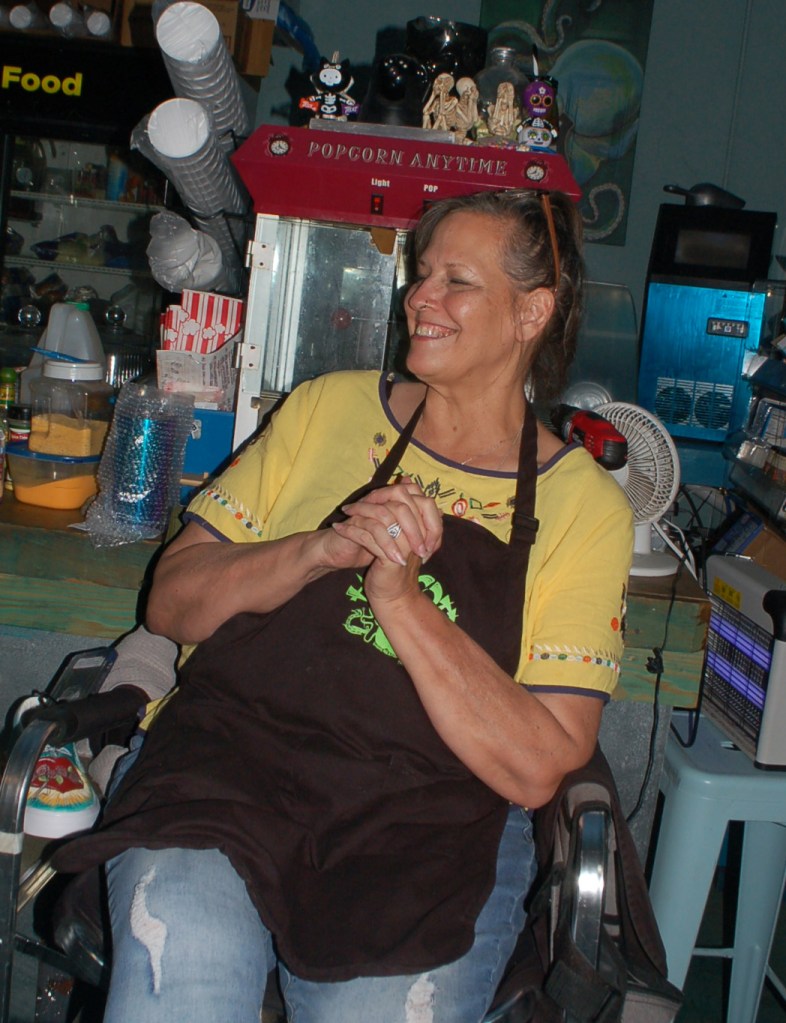
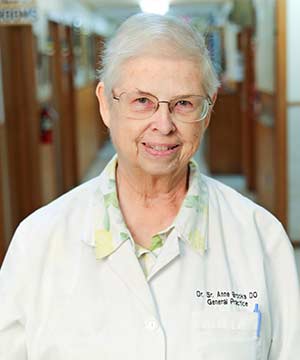
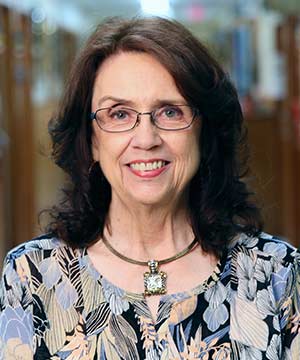
I took a picture of Cindy at the clinic, but I will be nice and use this one from the clinic website instead.
Thus began the Tutwiler Quilters and the other things that the TCEC provided. The TCEC has expanded. 60 Minutes did a show comemorating one of its anniversaries and showed a clip of the previous piece and an update. More donations rolled in. There were lots of activities for young people. A sign on the wall listed consequences for bad behavior, ultimately leading to a talk with Sr. Maureen. Those of us who are veterans of Catholic education know that was not something to be taken lightly.
Since Sr. Maureen left to become the head of her order, management has changed multiple times, and recent conflicts with the board of directors lead to the departure of the last director. Different people have different ideas about whose fault that was, but for the present, the center does not have a director or much programming.
Things go up and down here, but much has improved since Sr. Anne first arrived in 1983. She used to meet with us nearly every year when we made the trip, and told us once that the first thing she did when she took over was to close the Colored waiting room. “That’s right,” Cindy confirmed. “The bathrooms too.” She also told us that some of the houses did not have running water. Mississippi did not require it at the time. When the state finally required indoor plumbing (stand pipes, not sinks) waterborne diseases declined by about 90%. Sr. Anne used to tell us that building houses was health care work. “When people have a house, they think they are worth something. They start taking better care of themselves.”
By the time I made my first trip here, Sr. Anne was nearing or at retirement age, but kept working. Originally the town rented the clinic to her for a dollar a year, but eventually the bookkeeping got to be a nuisance, so they just gave it to her. She kept looking far and wide for someone who would take over the clinic and run it to her expectations. Finally the director of the Tallahatchie General Hospital expressed interest and showed up to a board meeting.
“He had just returned from a mission trip with his teenage children. He sat right there in that red chair. She had looked all over for someone to take the clinic over. Catholic Charities, Lutheran Social Services, all sorts of people. As he spoke you could just see her light up. She finally found someone who would take over the clinic and have it run the way she wanted. “
The clinic is now run by a non-profit trust under the direction of the hospital. Cindy claims that finding doctors is not difficult. “They actually like it. They come in and we supply the patients. We do all the paperwork and file all the insurance. Anything that is not covered by insurance the clinic covers.”
Donations paid for several expansions of the clinic, but the building has just about reached its limits. As a result of a sizeable bequest, a new clinic is being built nearby. The old building will probably eventually revert to the town.
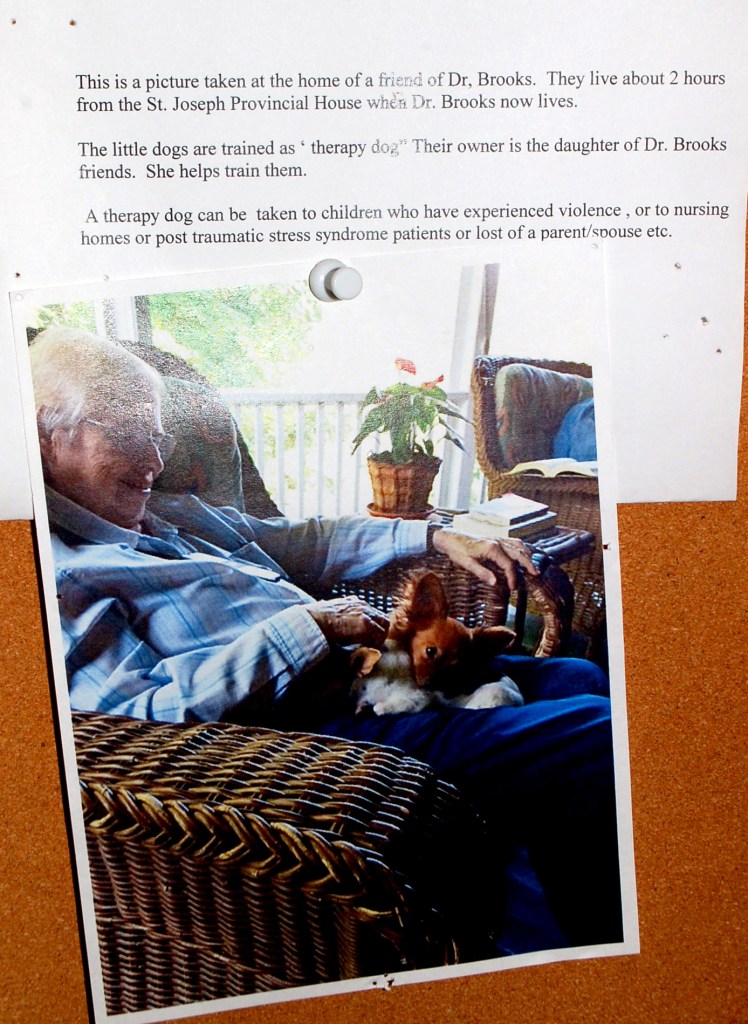
Sister Anne hung on about as long as she could. As soon as the hospital took over the clinic, she retired to her order’s retirement home in upstate New York. Jan Nowak, one of our former regulars is a pathologist and developed a good working relationship with her over the years. Shortly after she retired, Jan accepted a position at Rochester University, which put him and his wife close to where Sister Anne was living. They came for a visit. She had declined significantly and could hardly recognize them.
“She’s suffering from dementia. There are two things she knows. She knows that she is a doctor. And she knows that she is a bride of Jesus.”
Sherri has been the interim director of the West Tallahatchie Habitat chapter since her predecessor, her daughter, left for nursing school. She stepped in until they could find someone full-time and has been there since. It helps that she is a volunteer and Habitat does not have to pay her. She filled me in on what is going on with West Tallahatchie Habitat.
Ariel and family are putting in plenty of work on her house, more than we have typically seen in our trips down here.
Just before Covid, we were one of the last groups to work on House #46, then volunteers quit showing up and the family finished most of the house themselves.
Volunteer groups are starting to pick back up. We were the first group to come down here after the Covid pandemic, and several more are coming down this year. The crowd from Urbana High School are due in June. We’ll say more about them later when we talk about allocating wall space for plaques.
“Maybe the people at the community college in Clarksdale (Coahoma Community College) will come. That would be good. And it would be good for the students. They are learning construction. They can get some experience.”
Right now West Tallahatchie Habitat owns the land the houses are on. Once the last two houses are finished, the land can be turned over to the town of Tutwiler.
“Then we can get some services from the city. Water service, sewer service, trash service. Right now we can’t get the city to do anything and the county can’t do anything without the town’s permission. We tried to get them to put down more gravel in the roads and they can’t do it.”
Once the subdivision is done, the Habitat chapter will move on to other things. Habitat International wants to do a project with all the chapters to honor Jimmy and Rosalyn Carter.
They are looking for land in the area and are aiming at the town of Webb, which is about seven miles away.
“We have lots of requests for us to do rehab work, or asking us if we know someone who does it. We would like to branch out, but we just don’t have the money. We are looking for grants but we don’t have money to hire a grant writer. “
“When I moved here, there was a factory right down the road, another across the highway, another on the other side of town. Those are all gone. People had to move. There were no jobs.”
But things continue to go on and Sherri is not planning to leave any time soon.
The Habitat chapter got started when Sister Maureen followed Sister Anne Brooks down here. Sister Maureen was the driving force behind the community center and a tough act to follow.
“She lets me know when she is coming down here. I tell her I am just trying to complete her vision. When we finish the last two houses, we will have some sort of celebration. I don’t know if Sister Anne can come. We’ll have to have a picture of her or something. But Sister Anne and Sister Maureen, they were the ones who had a vision for this town. I am just trying to complete thier vision.”
I do most of the writing and provide most of the pictures for this blog, but I always like to get the other team members involved and let them provide their own individual insights and experiences. Most of the crew took a trip to see some of the local sites yesterday. I skipped the trip. I have seen them in past years and enjoyed just taking a break. But this provides a great opportunity to hear from someone else.
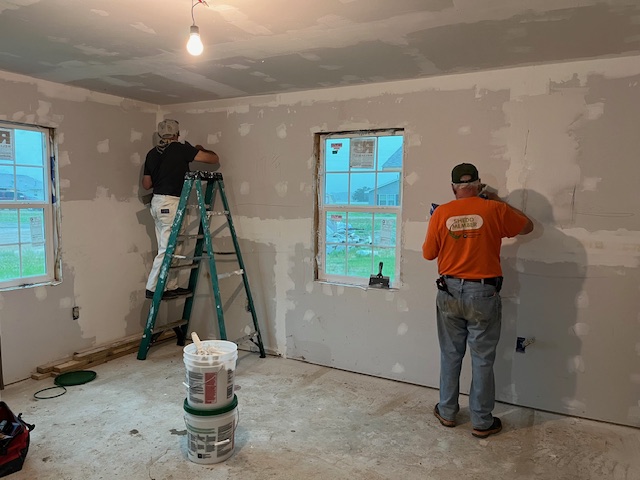
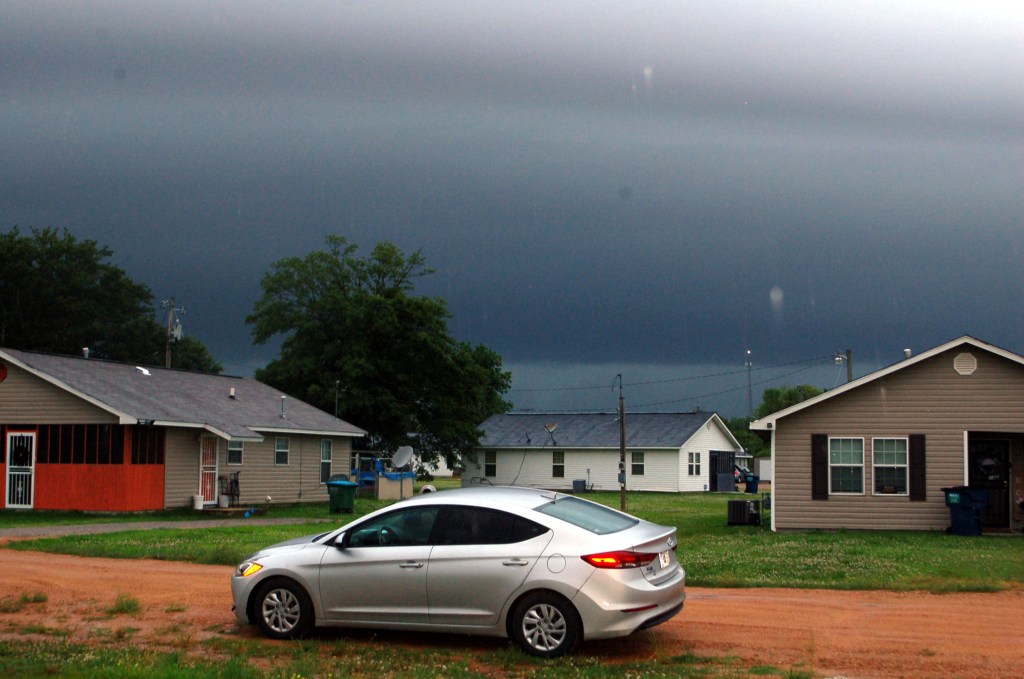
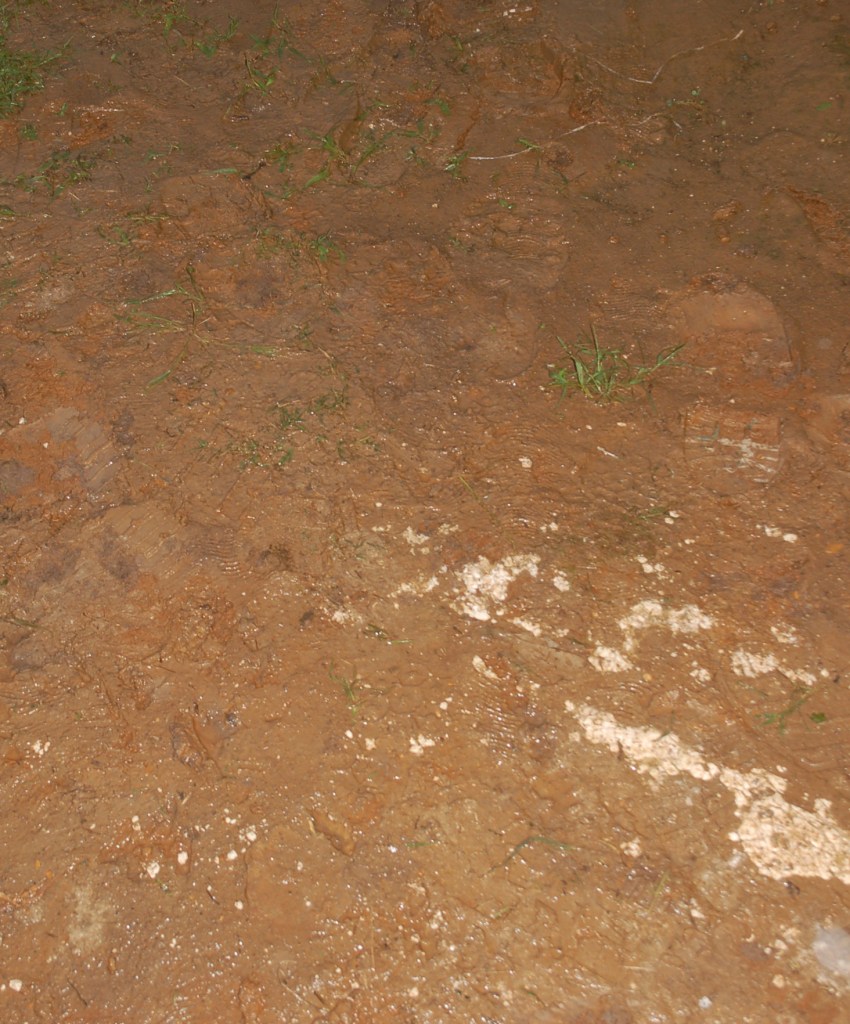
We got a good start installing siding on the last house. We were going gangbusters and hoping to get lots done today. Then the rains came. Thunder and lightning was as all around and the ground turned into muck. So we moved indoors and worked on mudding the drywalls in preparation for painting.
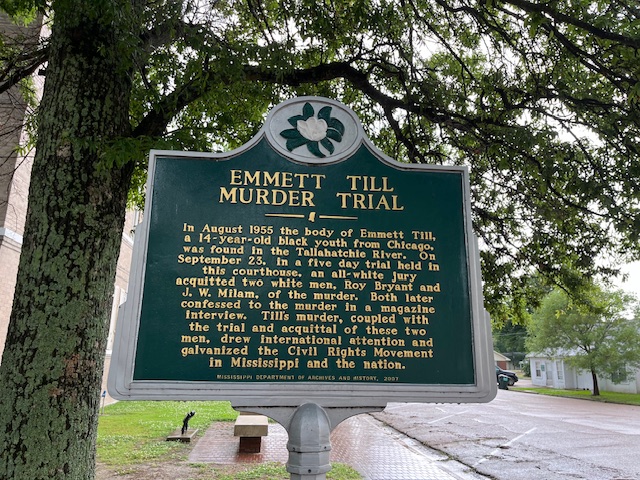
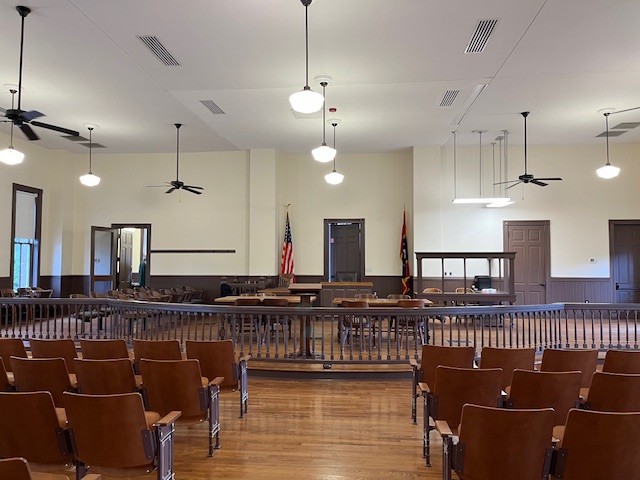
After lunch, some of us went on a field trip to discover history of the area. Our first stop was in Sumner, where the two white men who killed Emmett Till were sent to trial and found not guilty by a jury of 12 white men. They later admitted that they were guilty.
The old courtroom is still in use, and is now a historic landmark under the US Park System.
Then we visited the private Emmett Till Historic Intrepid Center in Glendora. Emmett was killed here and the center has displays explaining what happened.
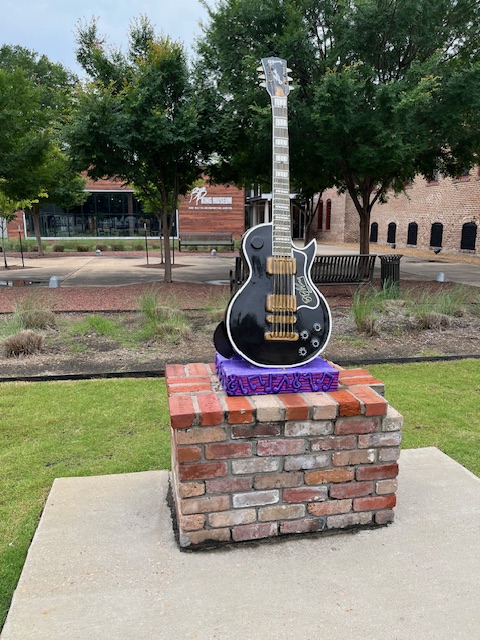
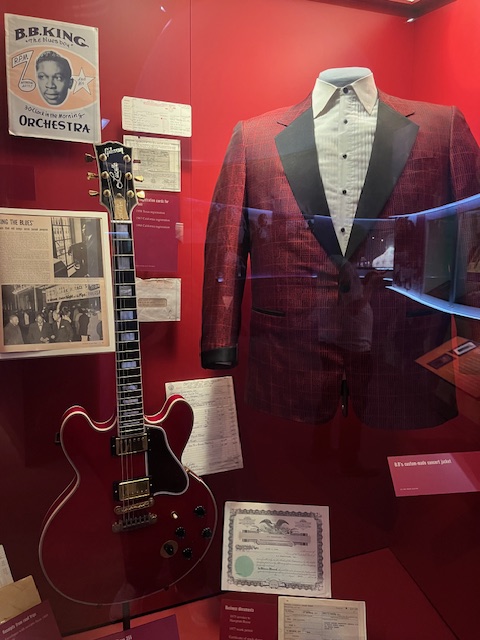
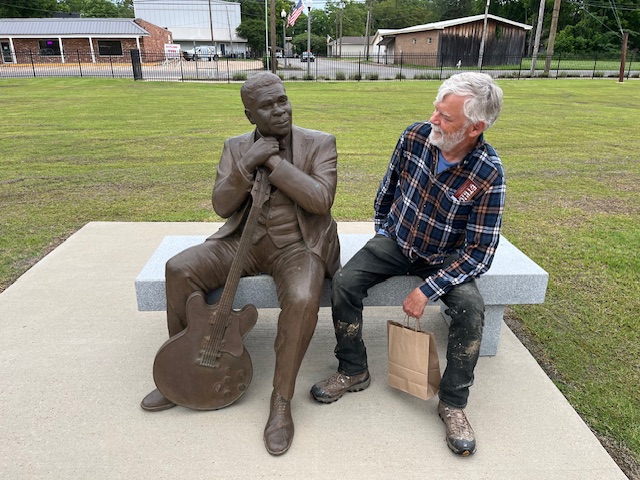
Our next stop was at the B.B. King Museum. They have many displays of B.B.’s amazing success as a blues guitarist.
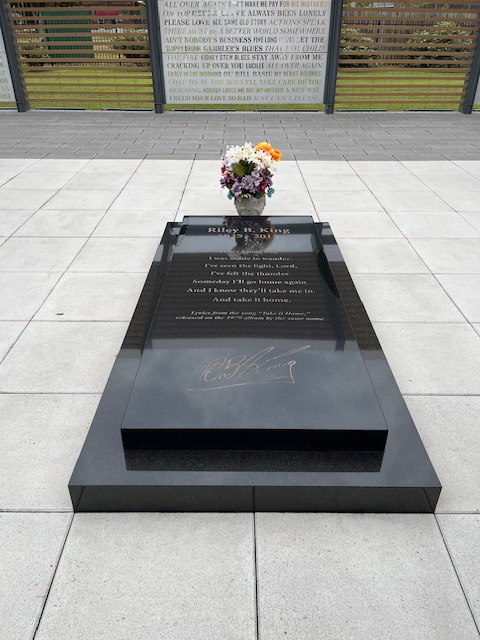
B.B.’s gravesite is at the museum.
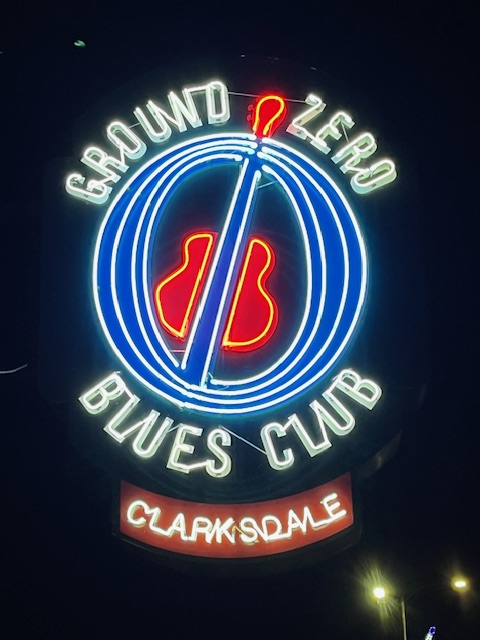
We ended the day with a visit to Clarksdale to Morgan Freeman’s Ground Zero Blues Club. It was amateur night so we heard lots of acts — some better than others.
Clarksdale, MS is about fifteen miles away from Tutwiler. It is the location of the Delta Blues Museum and a bunch of blues clubs. One of the locals once told me that what Clarksdale needs is a place to eat and drink WITHOUT live music. Every year we wind up at Ground Zero Blues Club.
Thursday is often Open Stage night, so predictably the level of talent varies. The first couple of performers we saw were not ready for prime time, but then some of the local regulars took the stage.
Stan Street has been part of the Clarksdale scene for who knows how many years. He operates Hambone Art Gallery and performance space a couple blocks away.
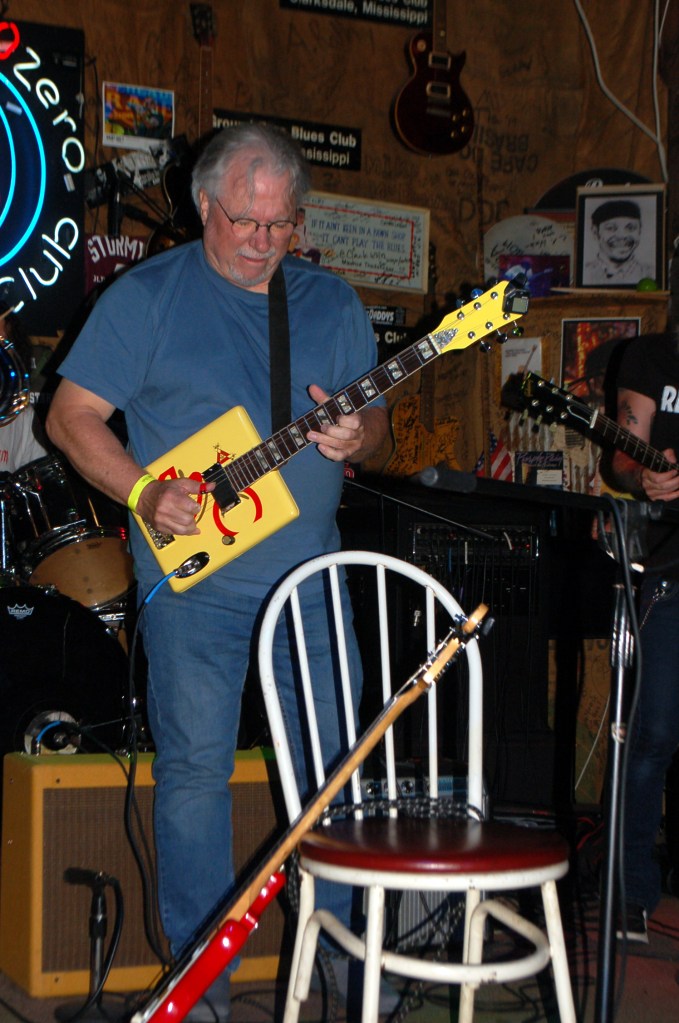
He brought up a guitarist from up by Sheboygan, Wisconsin dare, who made his own guitar and knew how to play it.
And this guy showed up on the stage as well.
I tried to embed this, but the program will not let me, probably because I signed up for the cheap WordPress plan. Oh, well. If you want to see what we saw, here it is.
Morgan Freeman lives in Clarksdale and is a part-owner of the club.
Just in case you did not know that, here are some gentle reminders.
There are flags from all over the world hanging from the ceiling. I shot pictures of some of them, but apparently deleted them, so you will just have to take my word for it. The one that I did not delete is the recently adopted flag of the state of Mississippi.
After years of controversy and a great deal of public pressure, Mississippi finally decided to get rid of its former flag that had the Confederate battle flag in the canton. The flag was designed in 1896 and the designer claimed that the thirteen stars stood for the original thirteen states, but nobody believed that. I remember being taken aback during my early trips down here seeing it flying above public buildings. There was a referendum in 2001 that would have removed the Confederate battle flag from the canton and replace it with a circle of stars on a blue field. It failed with about two thirds of the vote being in favor of keeping the old flag.
By the turn of the century, the Confederate battle flag was being seen more and more as a symbol of racism, and public pressure mounted to change the flag. Neighboring Georgia dropped the Confederate symbol from its flag and after the racially motivated massacre at Mother Emanuel AME church in Charleston, South Carolina in 2015, pressure began to mount to change the flag.
In 2020 following the death of George Floyd in Minnesota at the hands of white police officers, the controversy flared up again. Demonstrations took place outside the state capitol. But perhaps more significantly, the Southeast Conference and later the NCAA determined that no post-season athletic events would be held in Mississippi until the flag was changed. In June of that year, the legislature passed a law removing the old flag and establishing a referendum to adopt an new on in November. In that short time, hundreds of designs were submitted, the list was narrowed to 147, then five, then two before the current flag was submitted to the referendum. It passed with about 75% of the vote.
Being someone who likes flags, I am impressed with what they came up with. I think it is one of the more attractive state flags and better than many of the proposed options over the years. And they did it in about six months. So change is possible, if often difficult and seemingly unlikely.
It started raining last night after we had all returned to the dorm and did not let up until this morning, then it started again.
The water table here in the delta is high, so it does not take a lot of rain to turn everything into Mississippi mud. Two years ago we put a picture of Noah’s Ark on our end of the week plaque.
So just about any work we do today is going to be inside. We typically take a half day some day during the week and go exploring the local cultural attractions, so the plan is to do some of that this afternoon. Tonight we will likely head into Clarksdale and catch some music.
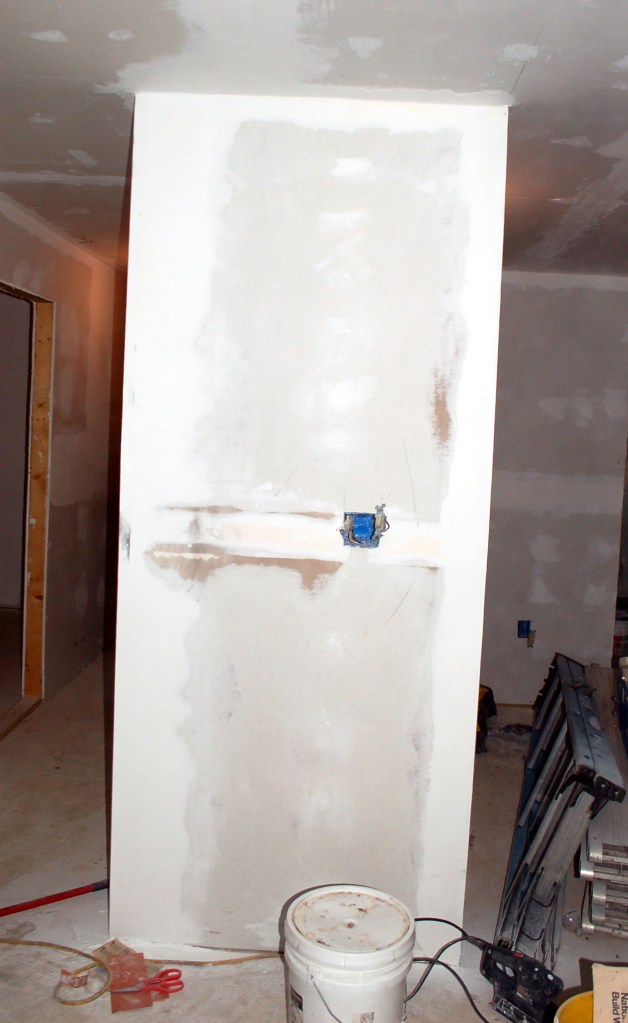
But we have gotten stuff done this morning. JD examined my rotating sanders and declared that they have gone to sander heaven, so I have left them to him to canabalize and then told Ariel that it is all her fault. I will have to rely on the flat one for the remainder of the week. That has worked OK so far, and here is what I accomplished this morning.
OK, it does not look like much, but until someone comes up with a VR method of letting you feel stuff in a blog, you will just have to take my word for it. The walls are nice and smooth.
Ariel brought her daughter along again today. She is having fun and brightening the environment around here. I wish I could show you pictures because she is pretty cute, but you will have to settle for Dino pretending he is a scary monster. The rest of us do not find Dino all that scary, but perhaps kids do.
On House 49, they are finishing up the siding, but only in the area of the front porch. It is pouring outside right now.
Food once again is great. Wednesday is usually the day that Andy whips up one of his feasts, so last night he made green curry with all sorts of stuff that goes in it with brown or vermicelli rice. It might be a not quite up to Andy’s usual standards, as he forgot to bring coconut milk, and oddly enough, the local Dollar General did not have any. But it tasted good. This morning, Kristin made avacado toast and we still had lots of fruit left. Yum!
So much of our experience down here over the years has been two steps forward, one step back. Needs are great and progress can be painfully slow. Several of us, primarily the rookies, made a visit to the Tutwiler Community Education Center.
Sister Maureen Delaney was the first director of the center and started a lot of the programs. The Tutwiler Quilters attracted awards and attention and provided a source of income for local women while helping to preserve an African American heritage. Right now there is only one person making quilts as part of the program.
There have been many great programs run at the community center, but since Sr. Maureen left, it has been difficult to find stable leadership and many of those programs are suffering right now. There have been some significant accomplishments in the past year or two, but the most recent director left after a dispute with the board and currently there is no permanant director.
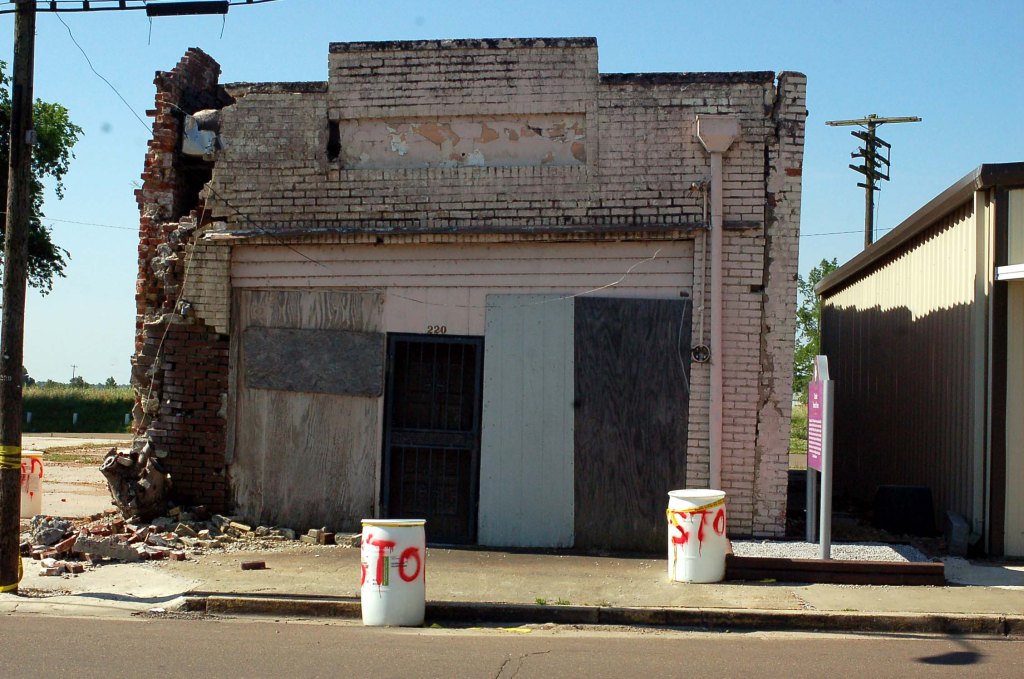
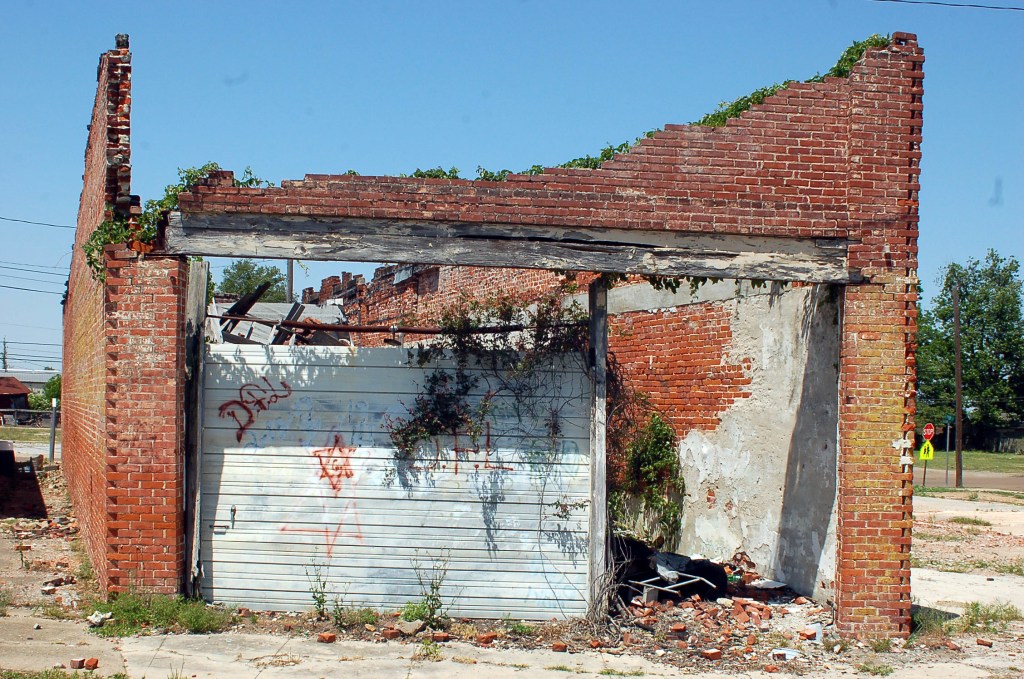
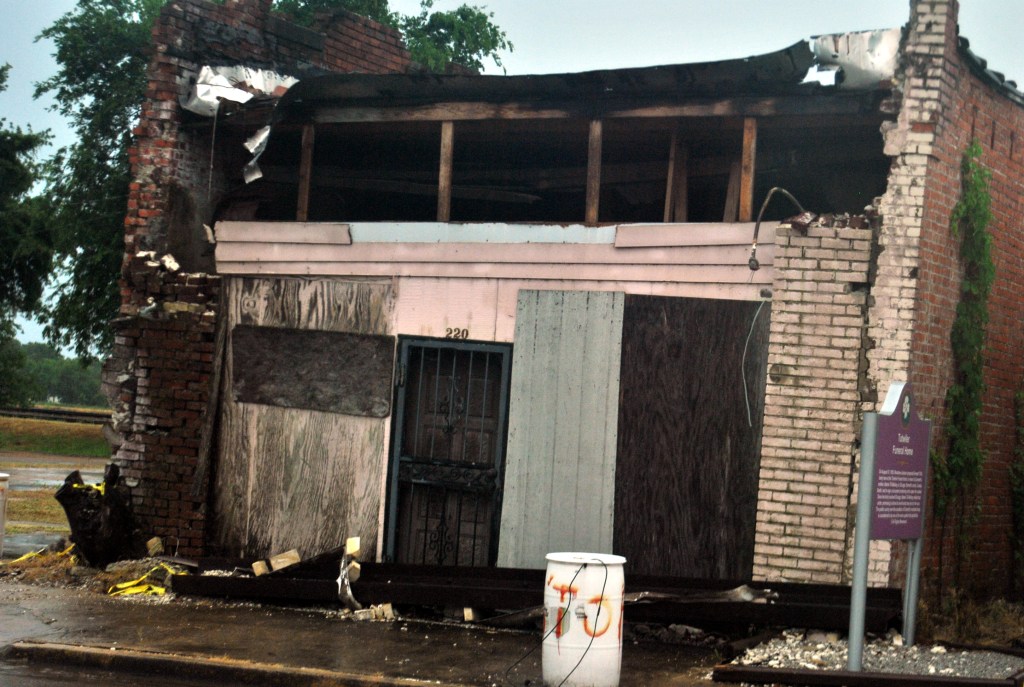
One of the things Tutwiler was known for is being the place where Emmett Till’s body was embalmed. Emmett Till’s tragic death and the effect it had on touching off the Civil Rights Movement is of great historical significance and there is an historical marker planted in front of the funeral home. Unfortunately, until recently there was also a sign warning people not to walk on the sidewalk because the funeral home was gradually falling down.
This is how the building appeared when I first came down in 2012.
This is how it appeared a few years later when the facade had collapsed.
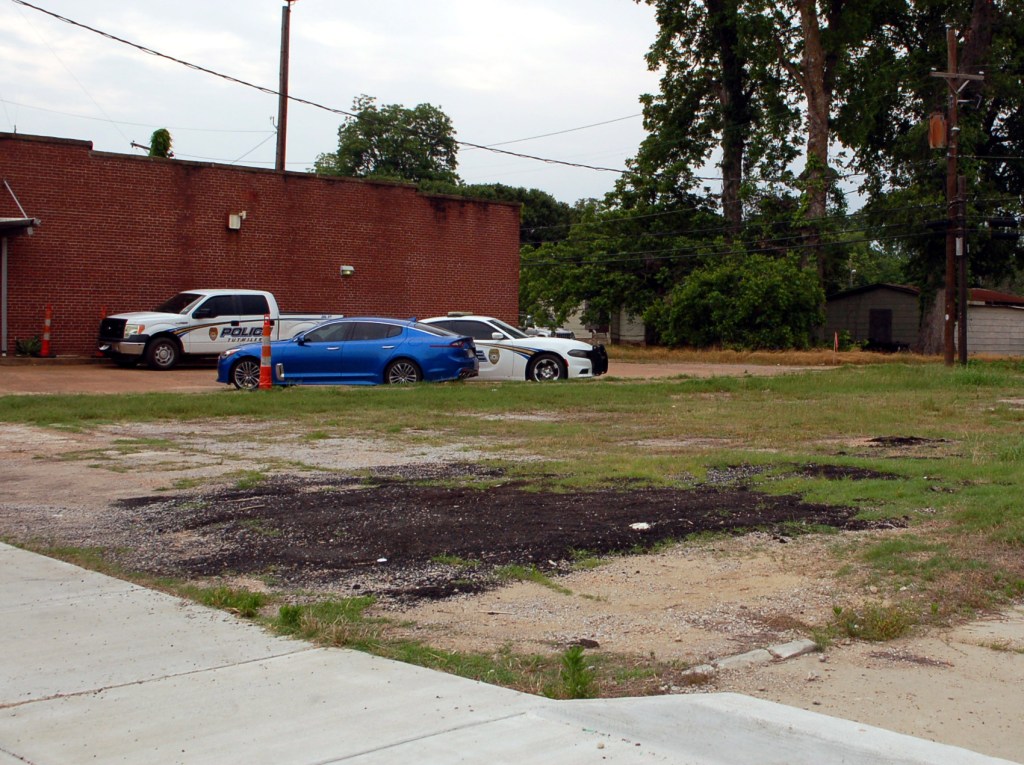
Here is what the lot looks like today. Any plans to restore the building have obviously been abandoned.
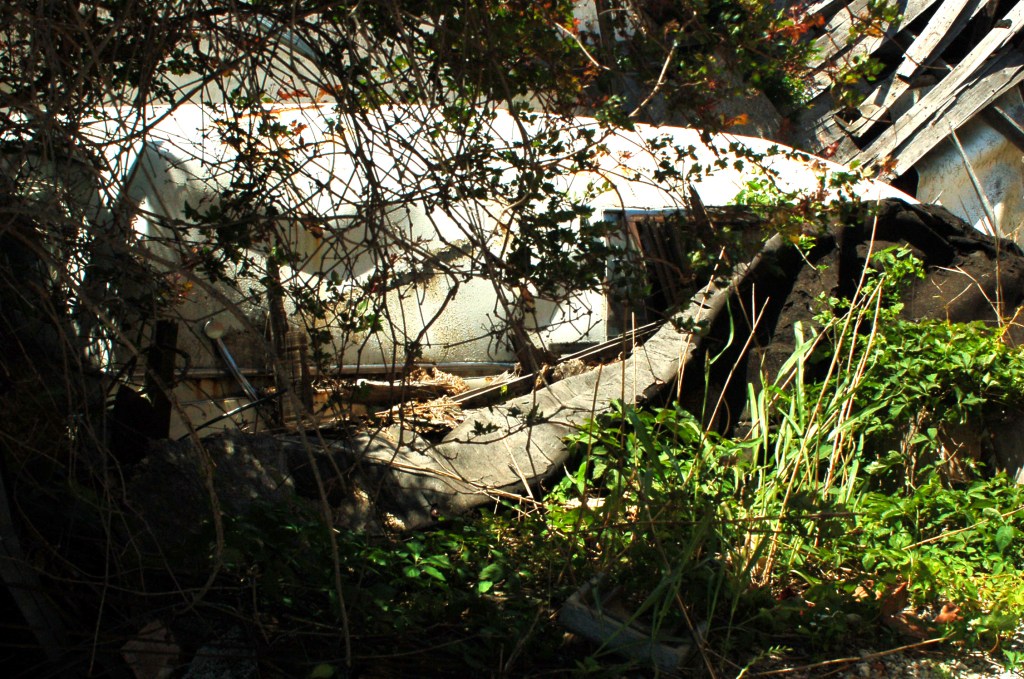
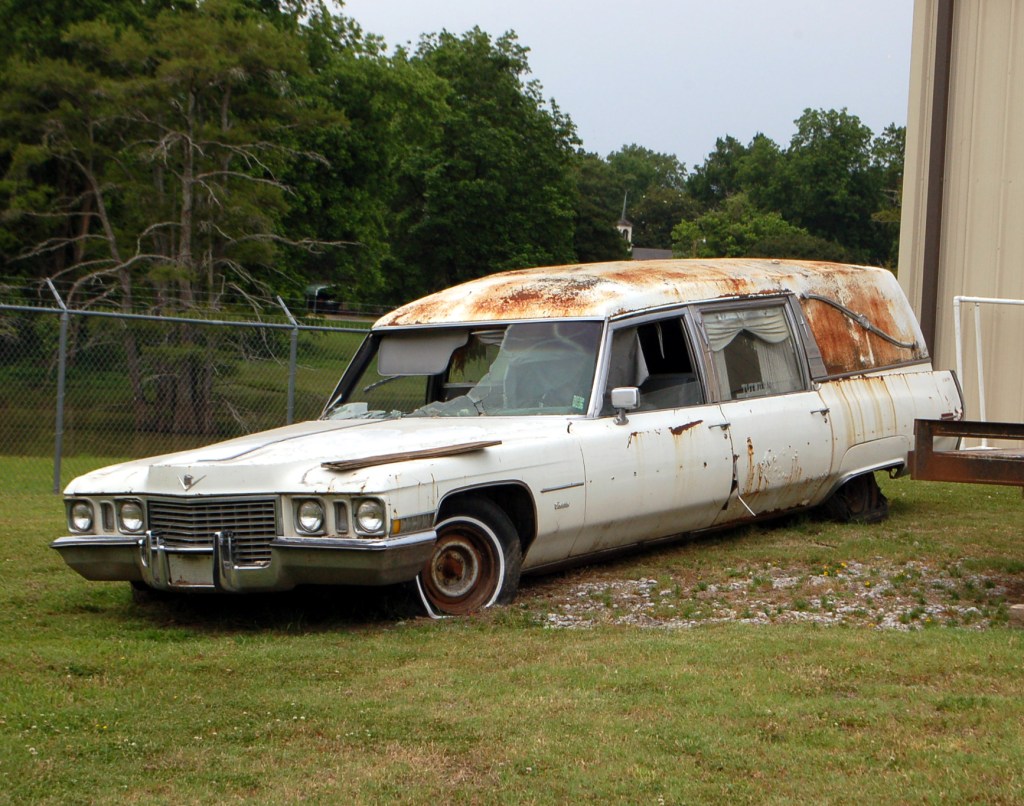
About 2013 I shot some pictures around town and took these of the back of the funeral home building. I found it curious to see that there was street gang graffiti in a town that barely had any streets. But a further examination revealed that somebody left a herse behind.
The building is gone, but the herse holds a place of honor in the parking lot in front of City Hall.
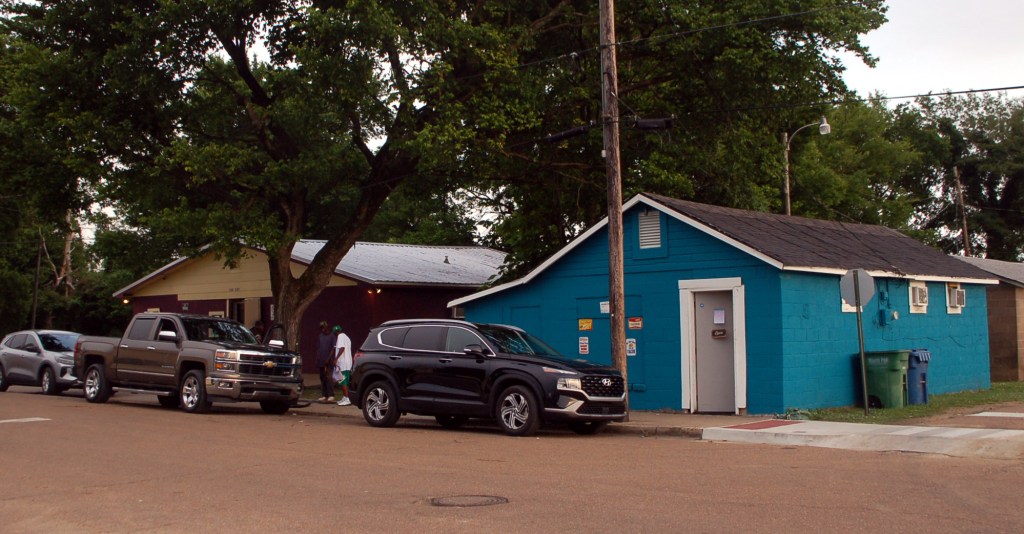
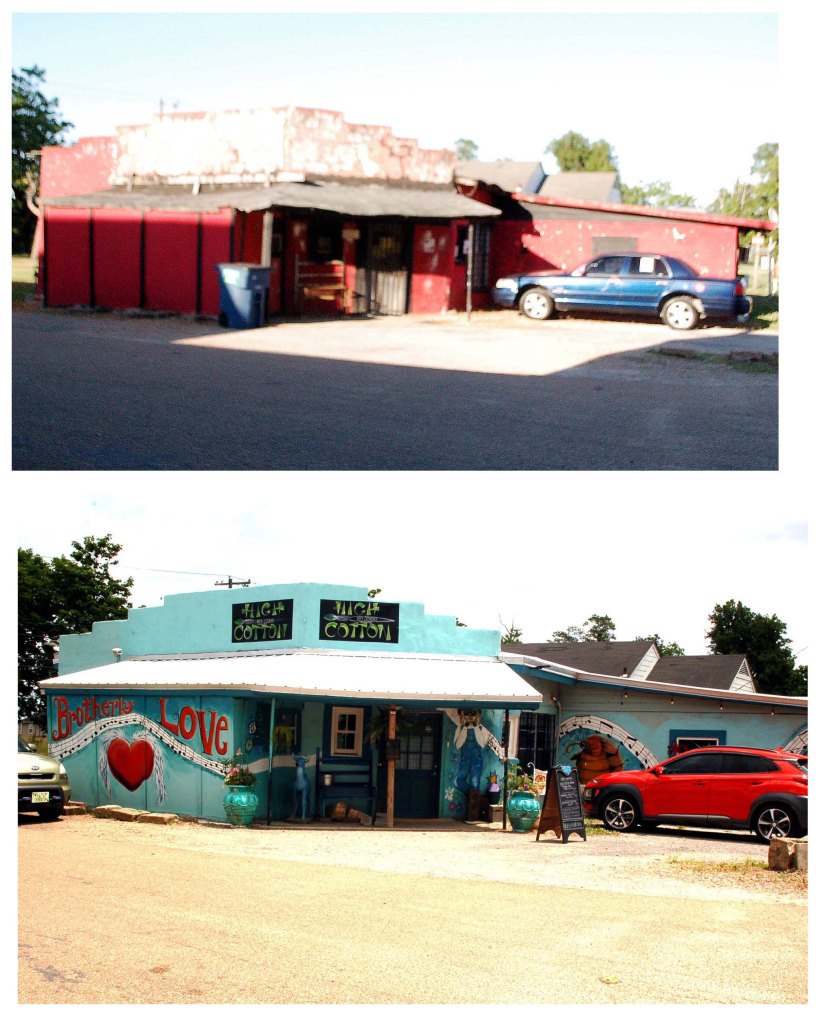
Jay and Stephanie operate the High Cotton Cafe. It used to be the scary bar across the street from the community center. None of us were ever courageous, or foolhardy enough to look inside. Jay and Stephanie bought it after the previous owners failed to pay taxes and turned it into this lovely cafe. Stephanie is a talented artist and they run an arts program for kids in the area. They also sell merchandise like this beautiful t-shirt.
When they started the cafe, they also wanted to take over the site of an abandoned gas station and open a fruit stand. Instead, the site went to somebody who opened what the community desperately needed, another liquor store!
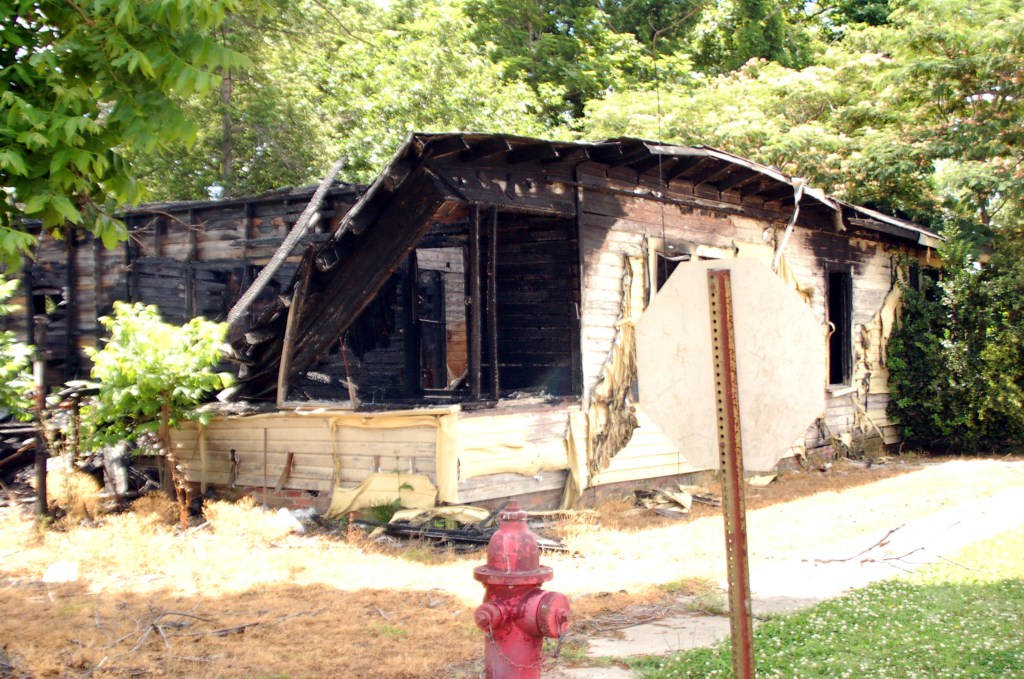
But the liquor store met its end in a fire.
Fortuitously, the building was located next door to the police department and across the street from the fire department. Unfortunately, the only person who had a key to the volunteer fire department lived in Greenwood, MS, which is about an hour away. When he arrived, the building was far beyond saving, but he thought the police might want to know that the building next door was on fire. They replied that they thought it had been put out already. When informed that it had not, they said they would look into it. The town can survive without another liquor store, and fortunately the fire did not claim any other buildings.
There are all sorts of interesting things one can find around Tutwiler.
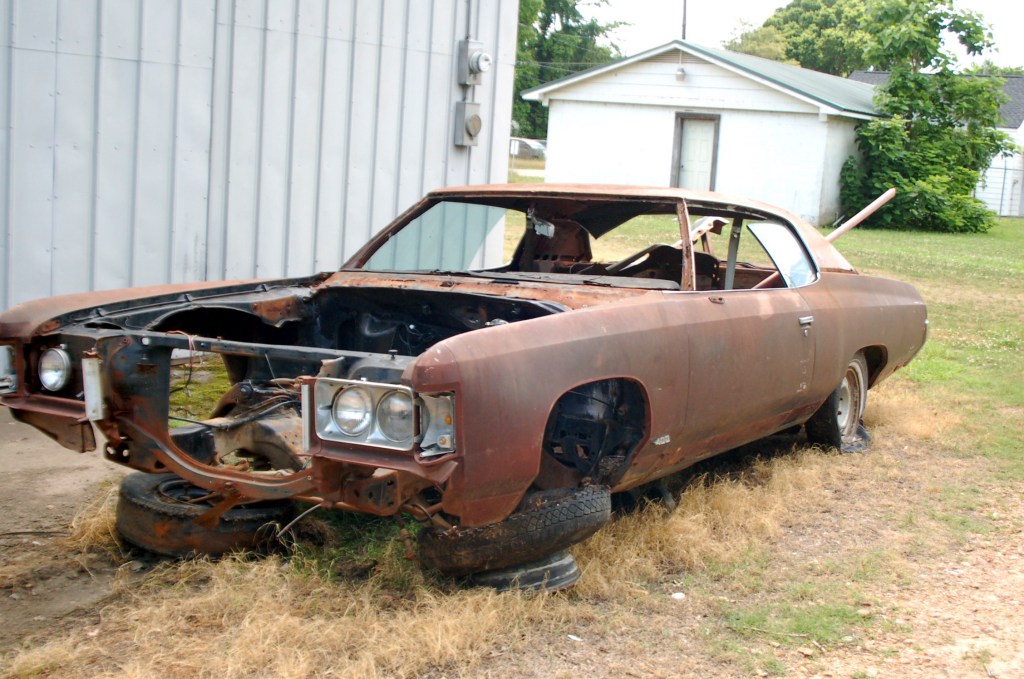
I am not sure when this place burned down, or how long this car has been sitting there. Perhaps it will eventually degrade into its consituent molecules and improve the iron content of the local soil.
More siding, sanding, and the like. Sanding still kicks up a lot of dust. I brought two rotary sanders down here and both of them are not working now. I brought a flat one as well. Not quite as efficient, but it gets the job done. However, the only sandpaper I have that fit it is thin, high-grade stuff which does not cut through wall mud very well, so progress was a bit limited today on that front.
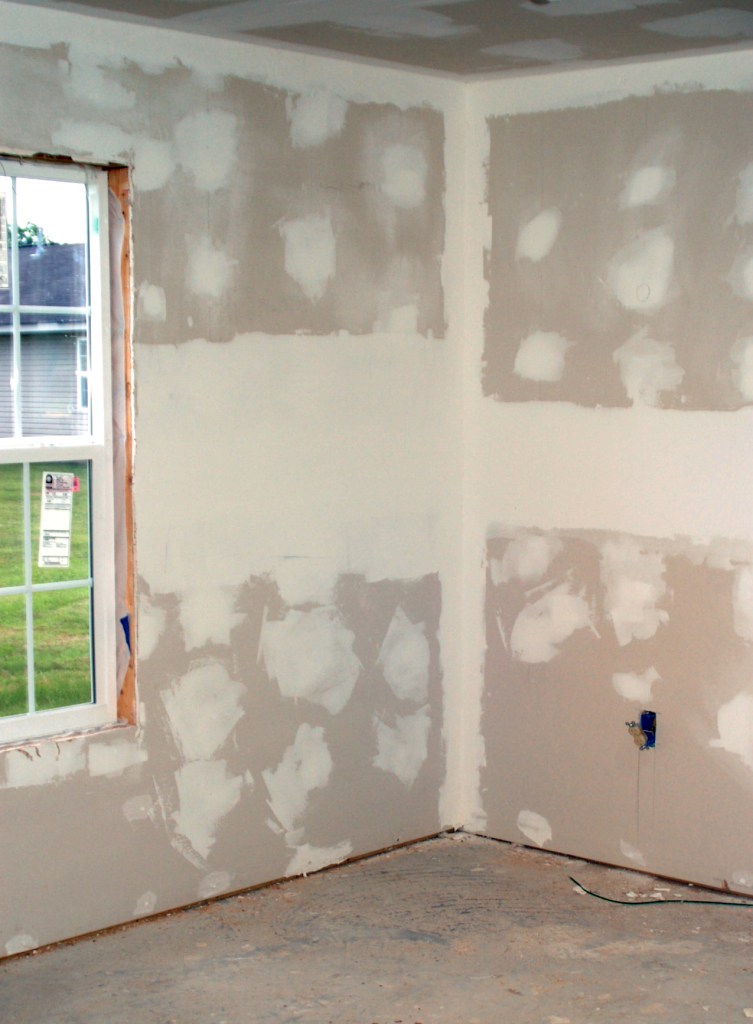
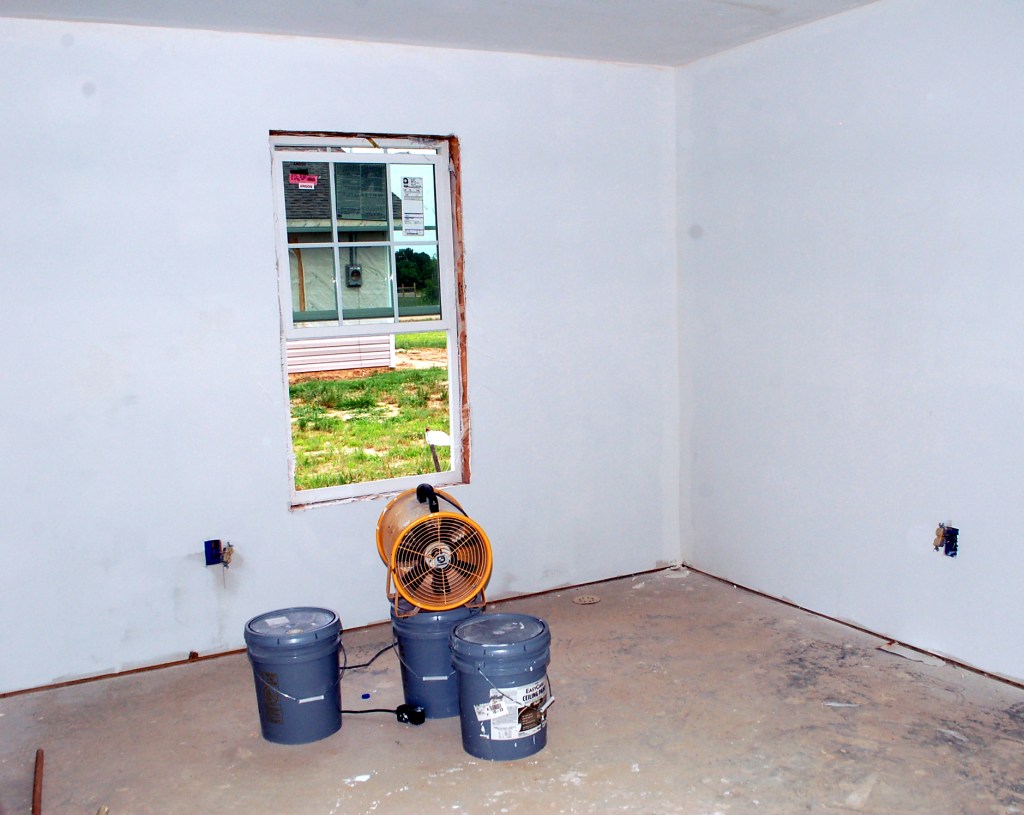
It is taking time, but progress is being made. Here is the front bedroom on Monday and Wednesday.
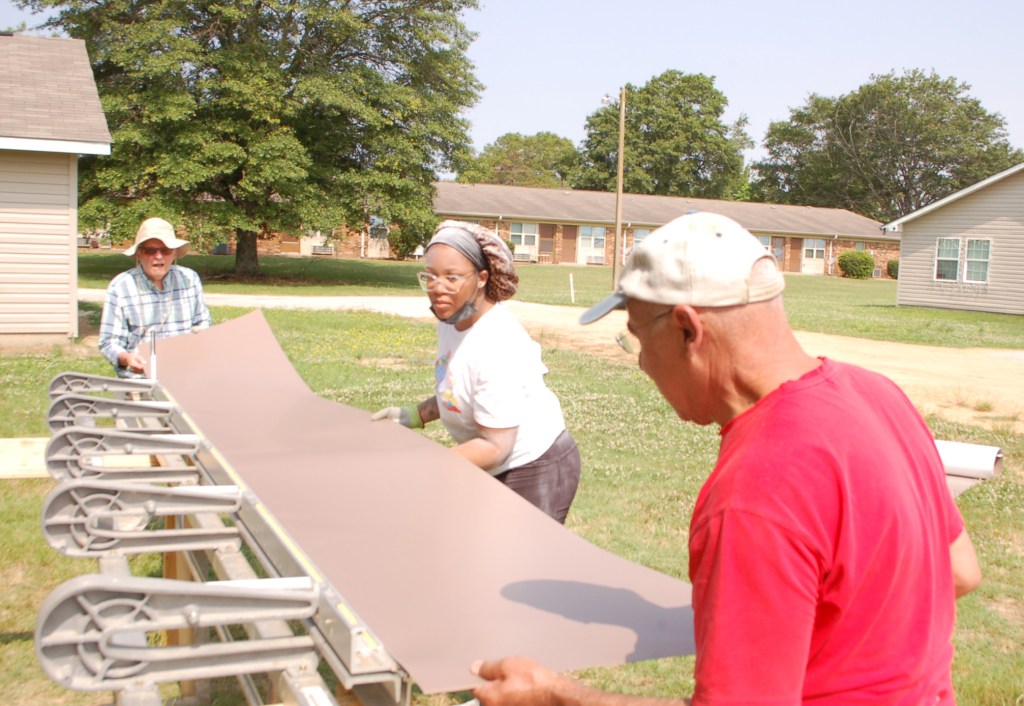
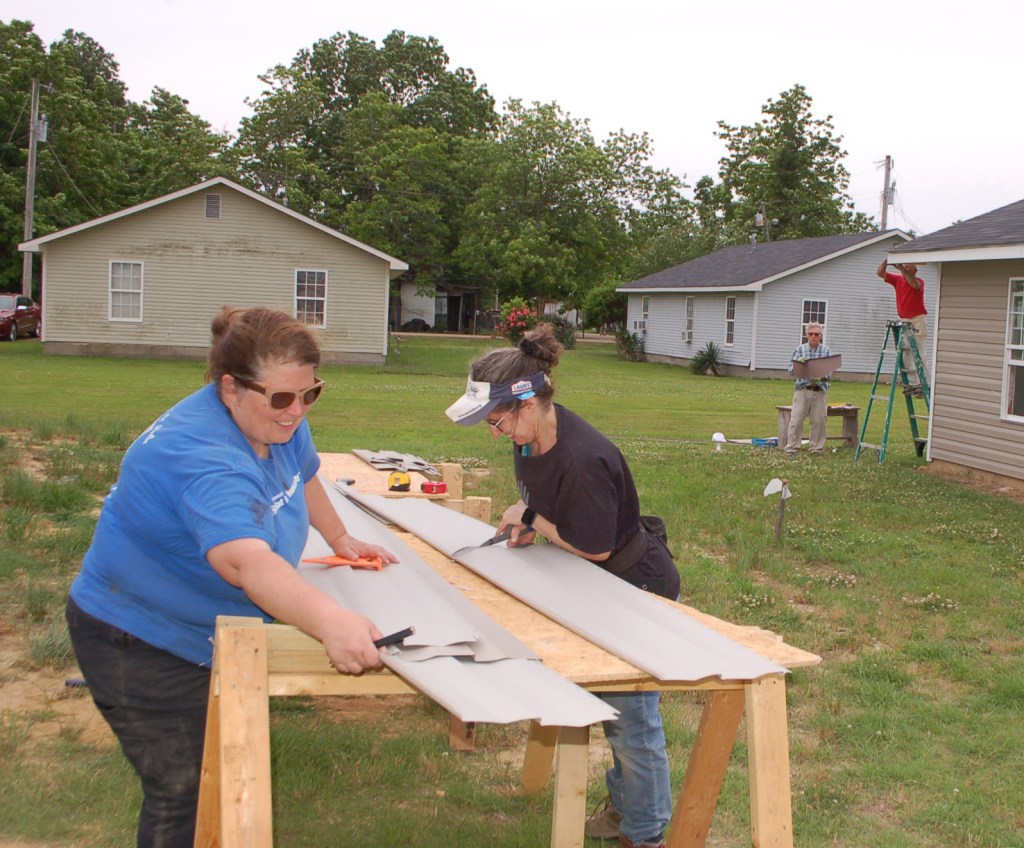
Next door, Dino and Dave are cutting siding and Kristin and Lorenzo are making sure it fits.
Ariel’s four-year-old daughter Alayah has been a constant presence, carrying stuff, retreiving dropped nails, and otherwise added a joyful presence to the worksite, but we cannot show you pictures of that.
A good amount of siding got cut and put up. Nicole and Kristin are cutting it and Dino and Dave putting it up.
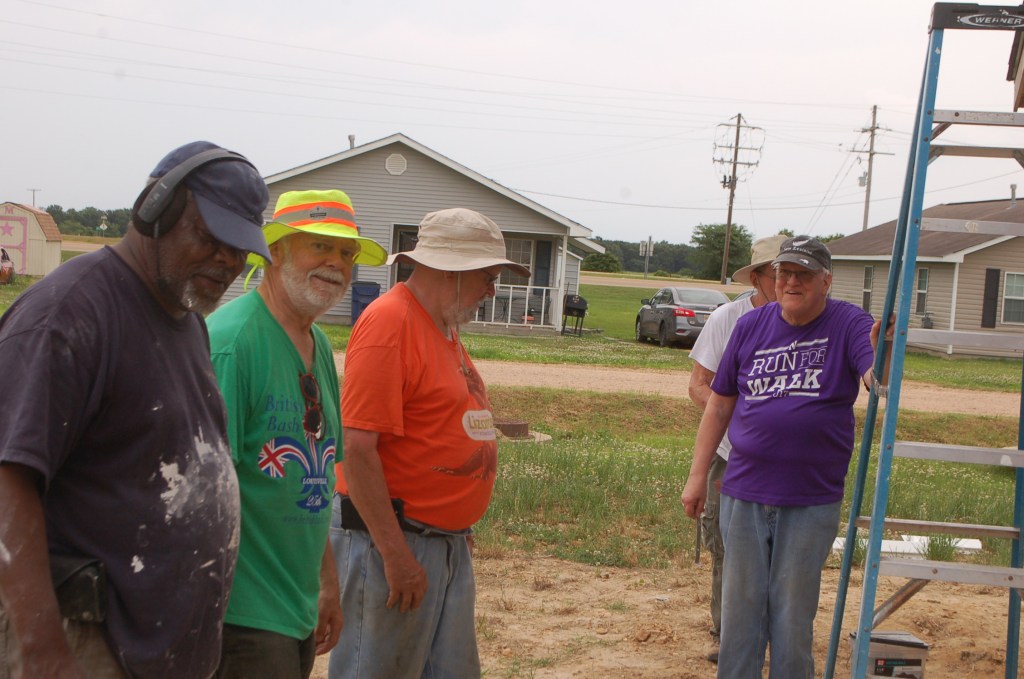
Here the siding crew inspect their work at the end of a productive day.
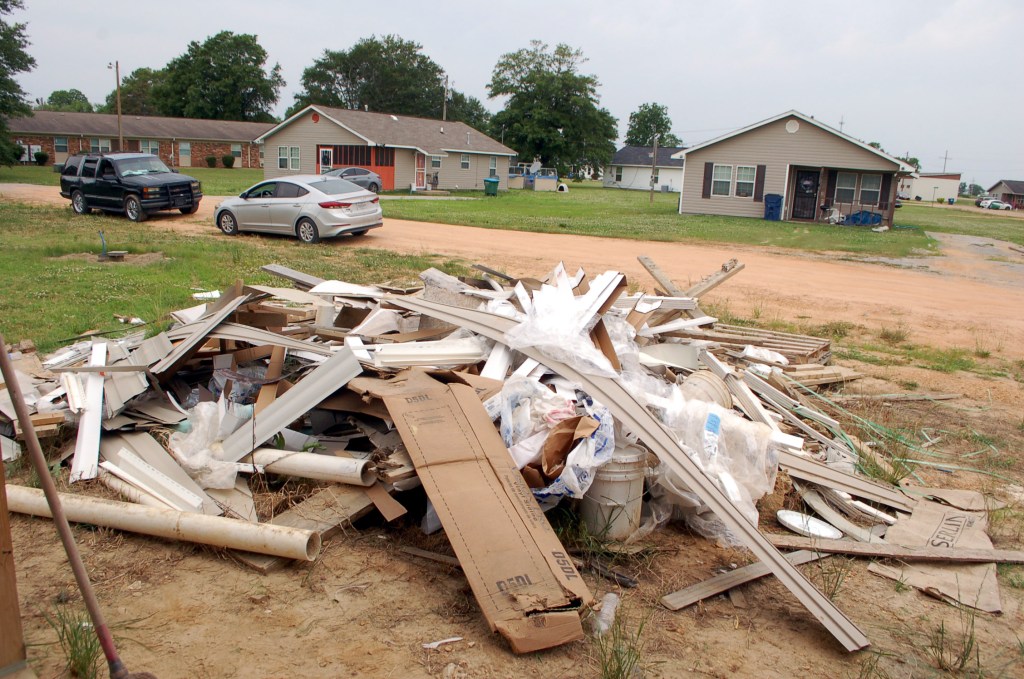
You can tell work is being done by the amount of garbage being left behind.
As of Tuesday morning, we had nine of ten windows installed in House #49. The exception being the one above, where Kristin and Lorenzo got so enthusiastic about cutting window openings in the plywood that they sawed right into the window. Oh, well. Actually, despite the fact that we have made just about every imaginable error over the years, our success rate is actually pretty good.
So now it is on to siding House #48 and mudding and sanding the walls in House #49. Here our brave warriors start to get set up for siding.
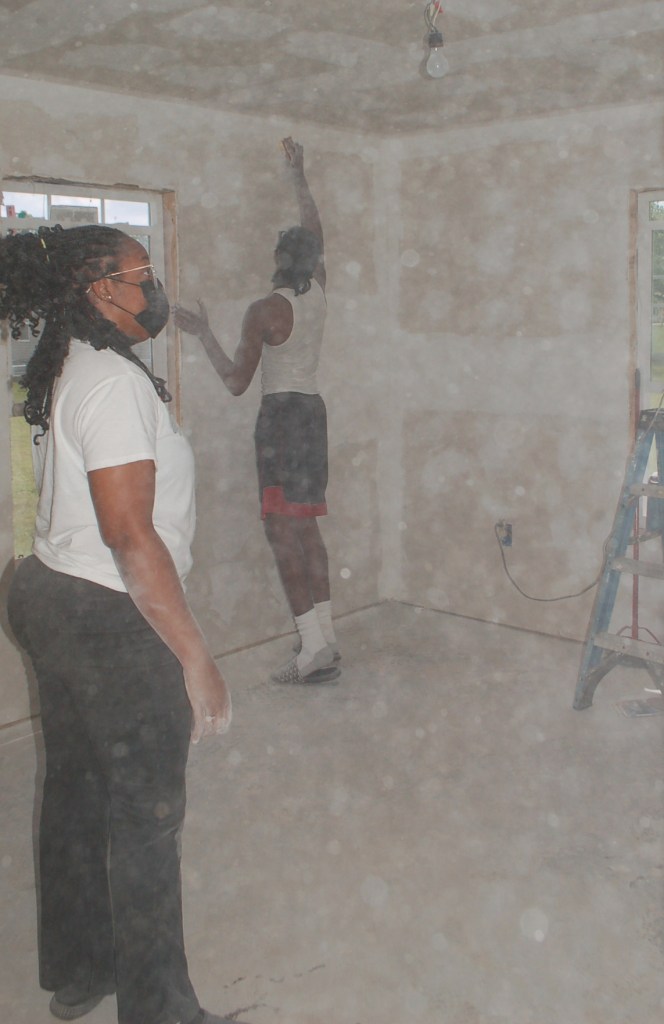
Meanwhile next door, we are working on sanding down the walls. First you mud the rough and uneven spots or the seams between pieces of drywall, then when the mud dries, you sand it down to create a smooth surface. Simple, right?
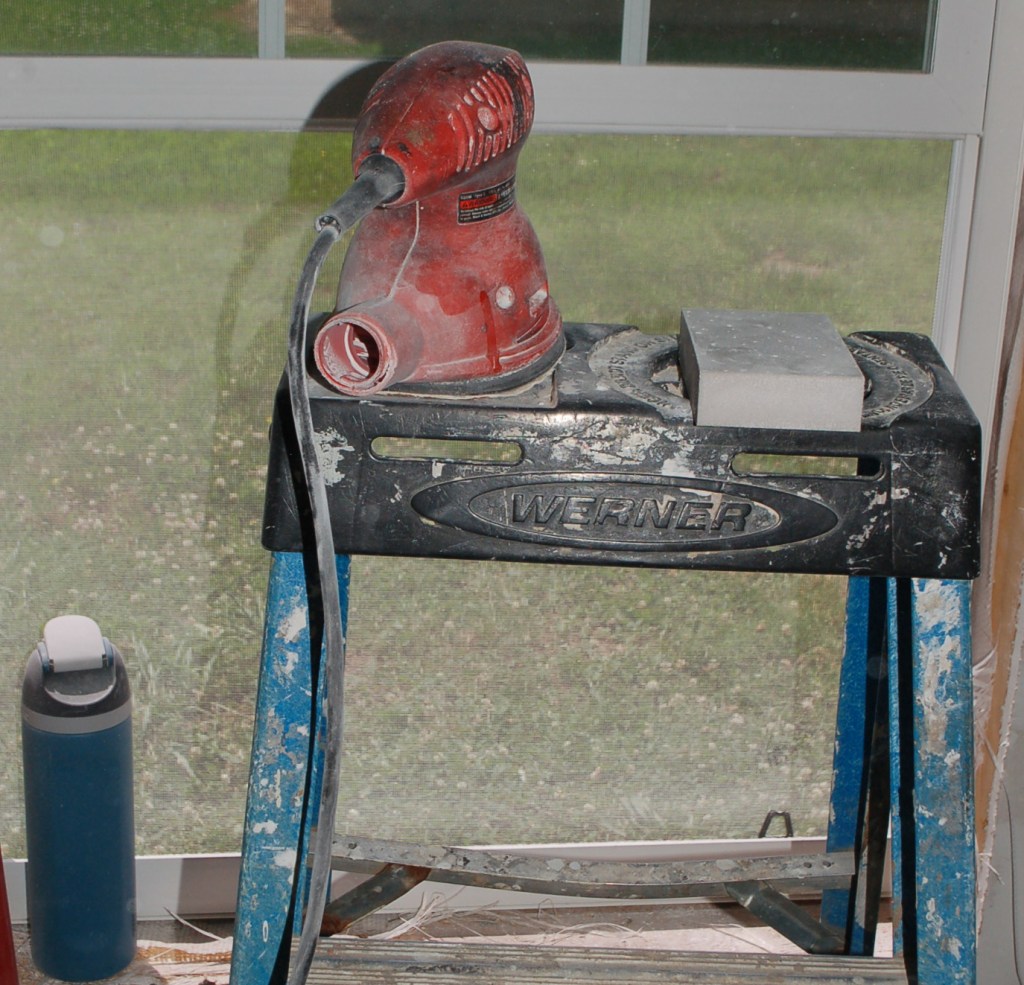
These are sanding tools. On the right is a sanding block which gets the job done and is useful for fine detail. On the left is a rotary sander. I started bringing these along the year after we had to redo somebody’s door and cabinets because of the poor job the group ahead of us had done. Doing it by hand can be tedious.
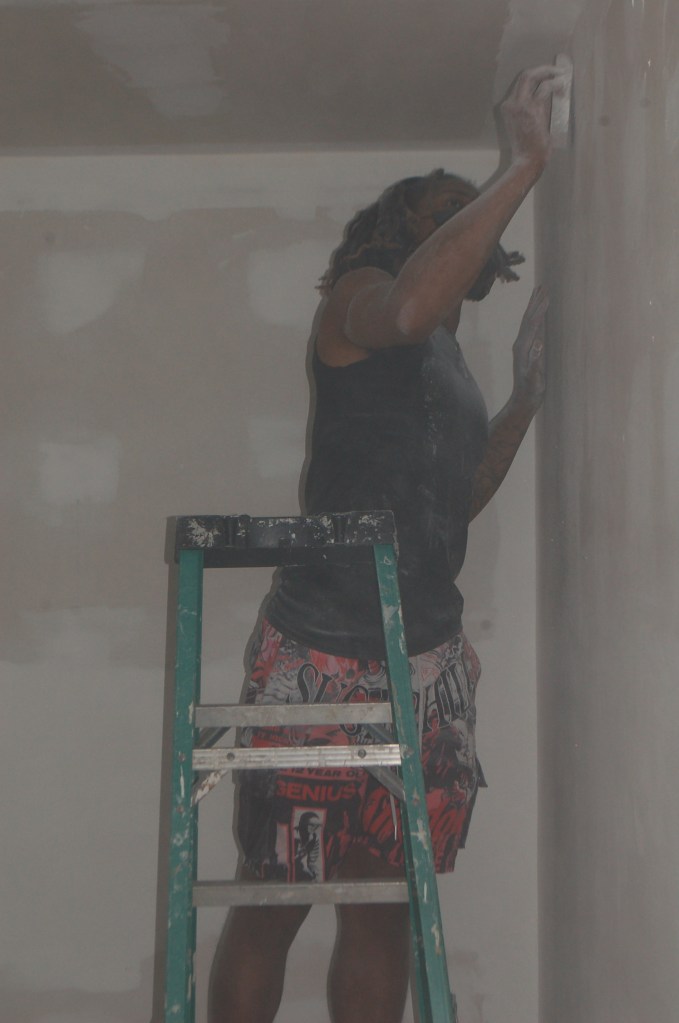
Using the sander is much more efficient, but it has the disadvantage of creating a cloud thick enough to make you feel like you are navigating a sandstorm. The water bottle in the picture above is helpful for rinsing the plaster dust out of your mouth and nostrils. These sanders do come with a bag to collect all the dust. I usually do not bother with them because they always fall off. But perhaps I should have considered that while working inside. Oh, well. Maybe tomorrow I will remember to bring a mask.
It also has the disadvantage of making you look like Caspar the Friendly Ghost when you are done.
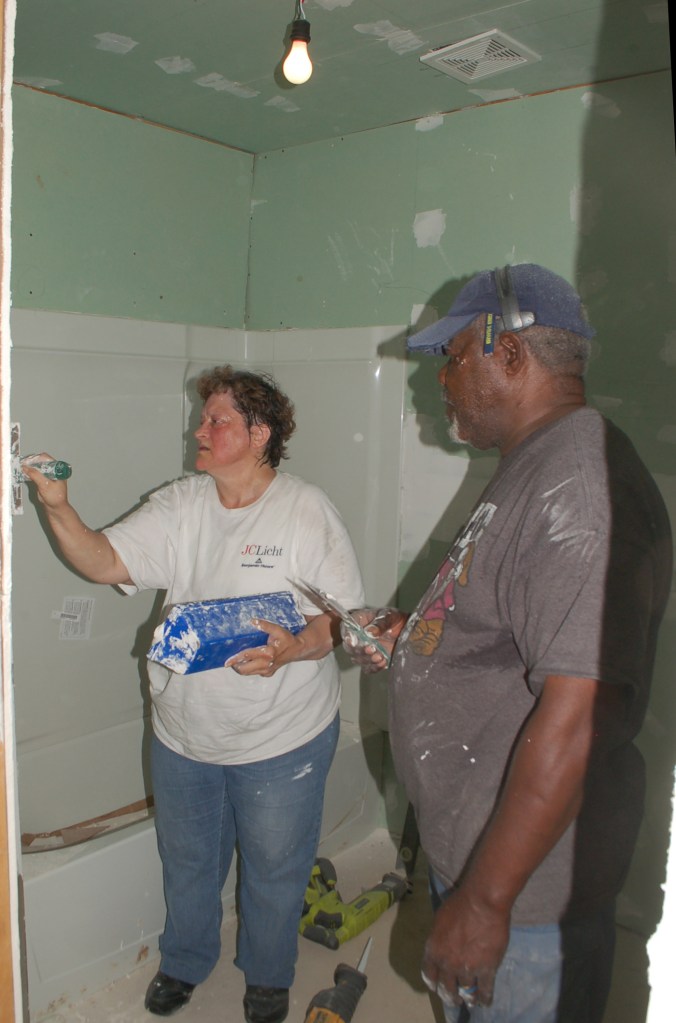
Here JD points out to Charlotte the spots that have to be mudded in the bathroom. We will be sanding those down tomorrow.
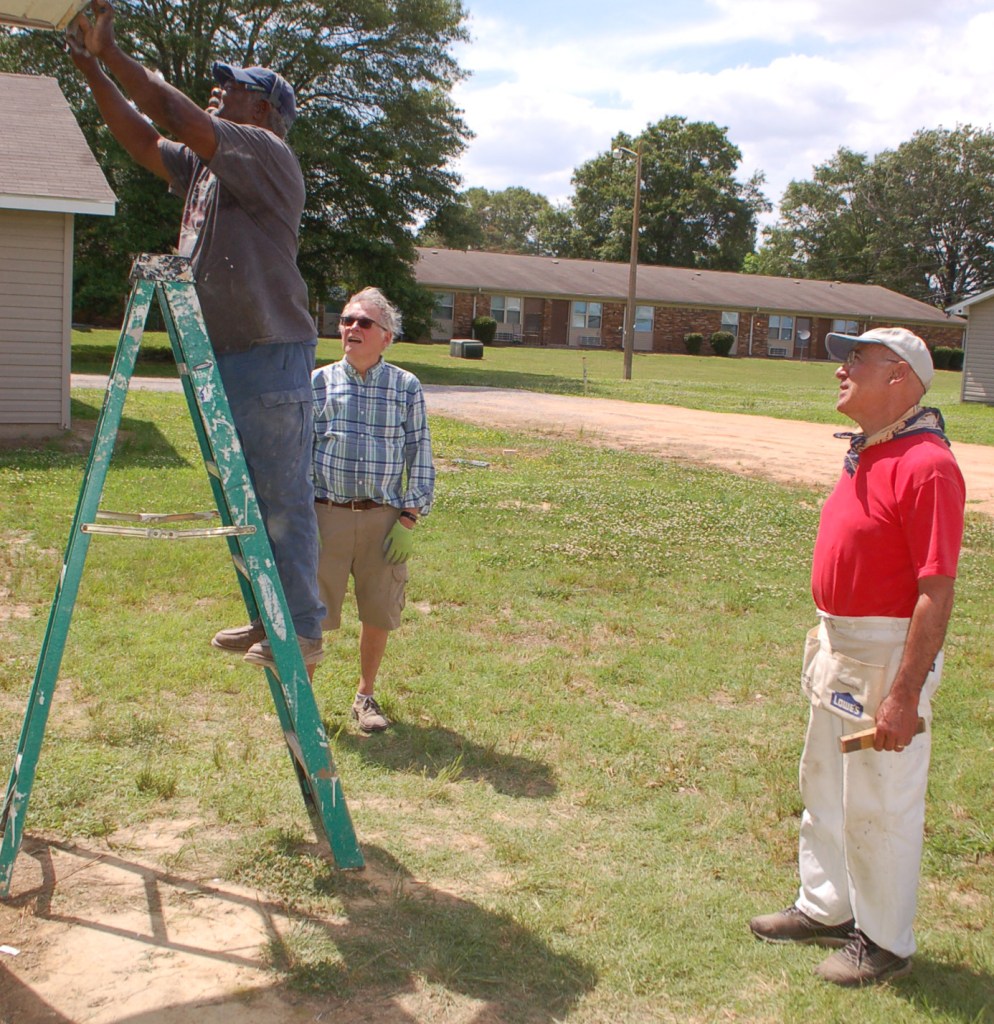
And JD explains the fine points of installing those birdboxes to Dave and Dino.
Despite the hard work often in considerable heat, this is not a place to lose weight. We eat really well down here. Andy is an accomplished chef, and several of the rest of the crew are not bad either. Andy usually fills up his smoker the week before we leave and brings down enough for at least a couple meals. Here is dinner Monday night consisting of smoked ribs, chicken, and shrimp, Southern greens, and cowboy beans.
Today for lunch we had deli sandwiches with couscous and a bottomless fruit bowl. I am not sure what couscous is exactly, but it tasted good
The crew returning for lunch after a busy morning.