

Emmett Till
Thursday afternoon and evening were eventful. Most of us took a trip to Sumner to see the Emmett Till Interpretation Center and related sites. Seventy years after his brutal murder, Emmett Till’s name, story and legacy live on. That legacy is surely not one of undivided progress and enlightenment. Blatant racism is no longer apparent. Black people and White people interact naturally and with apparent good will and no obvious tension. Beneath the surface, tensions remain.
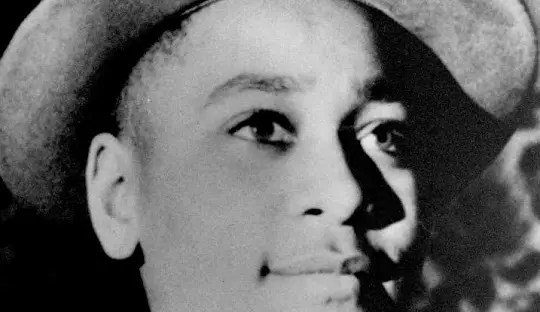
Were he alive today, Emmett would be 84 years old. His life would have taken its course, for better or worse, He likely would have left behind children, grandchildren and perhaps great grandchildren. In 1955, lots of black children traveled from Chicago, from where their families had settled after the Great Migration to visit relatives in Mississippi where they would congregate with family members, work the fields a bit, run around and engage in the kind of fun children of that age would. By all description, Emmett Till was just an ordinay kid, good natured, loved to laugh, saw no need to take life very seriously. He would likely be quite a lot like the 8th graders who I currently teach. It is hard to think that he would have imagined that his name would be remembered so many years hence, that his death would represent a turning point in the history of race relations in this country.
Reportedly before he left Chicago, Mamie Till warned her son about the racial climate in Mississippi and her replied, “Oh Mom, it’s not that bad.” But of course it was far worse than he could have imagined.
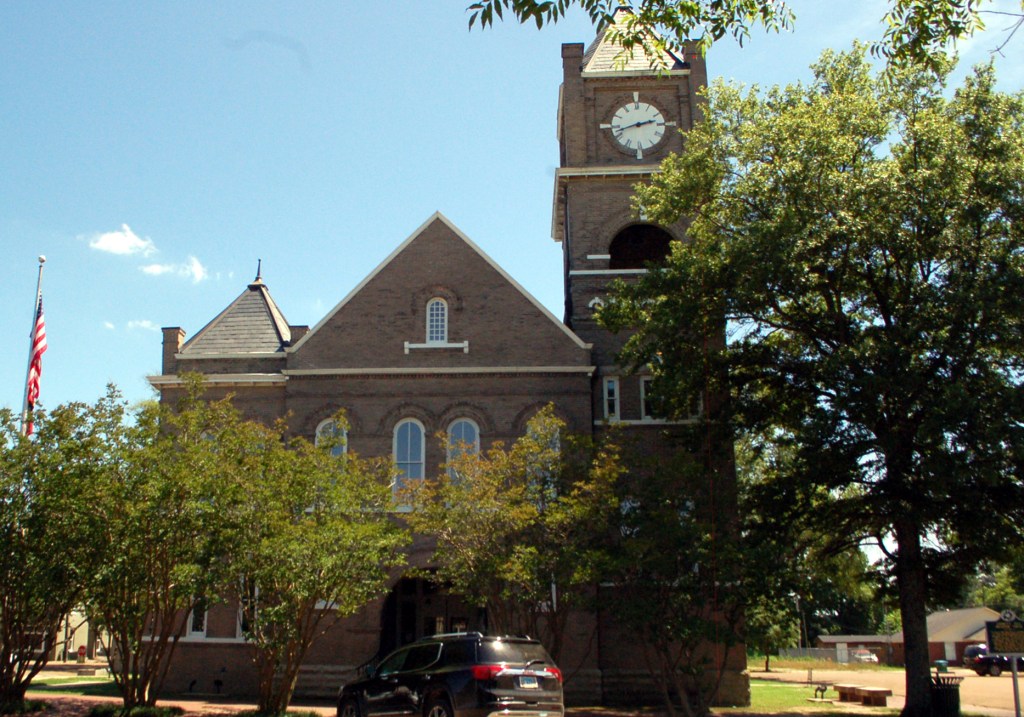
Until recently, the Tallahatchie County Courthouse where the trial of Roy Bryant and J.W. Milam took place had remained largely unchanged for years. It was recently declared a national historic landmark and is owned by the National Park Service. It still functions as a working courthouse and will continue to do so until its replacement is built. It is a small building, with only one courtroom on the second floor and a few administrative offices on the first.
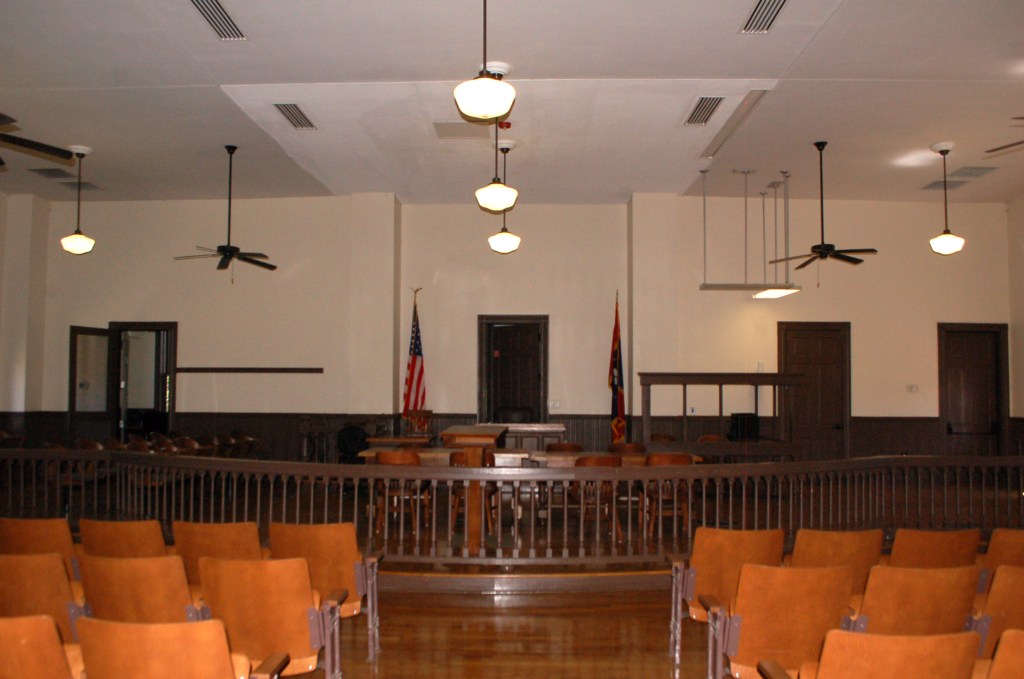
The courtroom has a few pieces of modern furniture and the recently adopted Mississippi State Flag. Otherwise it is largely unchanged from 1955. The area before the bar where attorneys sit and conduct business is very small, but it otherwise does not look substantially different than many courtrooms in which I have appeared.
Justice may have been denied, but it surely was not delayed. I was astonished to find that the murder occured at the end of August, the defendants were arrested the first week of September, and the very brief trial took place two weeks later, leading to an acquittal in just over an hour. It is hard for me to imagine that any prosecutor would bring a case to trial in so short a time, or any defense attorney would allow it. Today such a case would take a year or years to come to trial, months of investigation would take place, the defense would demand months to prepare. Life was different seventy years ago in a case where the result was a foregone conclusion. Milam and Bryant later gave an interview to Life magazine in which they admitted to the murder, though it seems many of the details in the article are inaccurate, like the location where the boy was beaten before being killed. The hasty investigation and trial and the determination to cover the matter up for the next fifty years account for the uncertainty about many of the details.

Till’s body was embalmed in Tutwiler, in the “black” funeral home. A sign now stands on the sidewalk commemorating that site. Until a year or two ago, the sidewalk around it was cordoned off with construction tape to protect passers-by from the falling masonry. There was some talk of restoring what remained of the building. Now the tape is not necessary, as the building has collapsed entirely. For those familiar with the Tutwiler of today, it is hard to imagine that such a building ever existed, much less that a crowd this size would have ever gathered there. This crowd would far exceed the entire population of Tutwiler, and perhaps some of the surrounding towns.
The whole sad story extends through several towns and a few counties, but the area is not that large. It would fit comfortably within a relatively small part of the city of Chicago. Reportedly there was little sympathy for the killers immediately after the crime. J.W. “Big” Milam was not admired in the community. He was as his nickname suggested a large man with a mean temper. His half-brother Bryant ran a string of grocery stores serving or more likely exploiting the local black population. Neither were well-liked or admired. The district attorney chose to have the case tried in Sumner on the opposite side of Tallahatchie County from where the defendants lived, hoping to avoid the favorable sentiment of thier neighbors. That may have been a mistake. Those who knew Milam and Bryant did not like them. After the trial, no one, and particularly no one in the Black community would buy anything from Bryant’s stores. Ironically, Bryant complained afterward that Emmett Till had ruined his life, after he had brutally taken his. A comment following the Life magazine article noted that “no one was proud of what had to be done.” Local people did not like it, it was just the way things were.

It was not until the matter became national news and the press descended on Mississippi that public opinion coalesced around Bryant and Milam, as people saw much of the country looking down on Mississippi. A remnant of that attitude still exists.

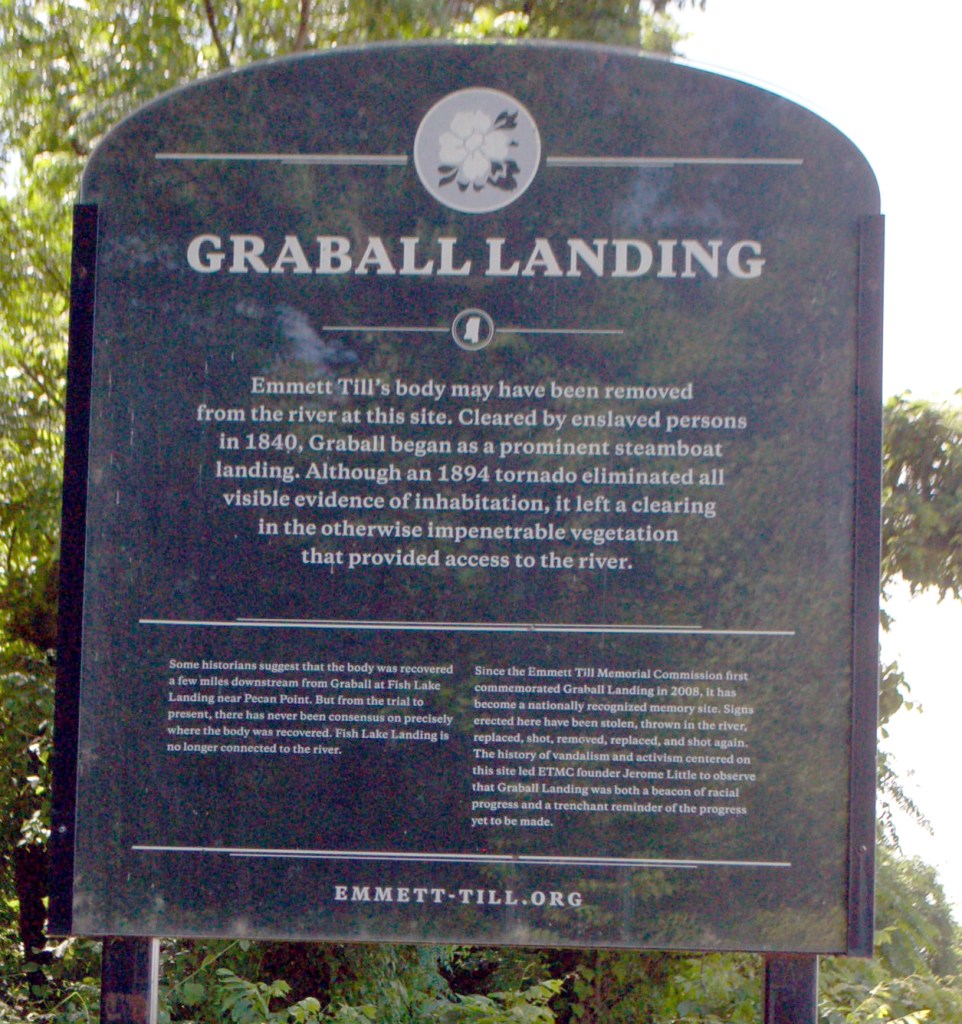
It was not until 2008 that an effort was made to commemorate the events of 1955. A sign was placed at the purported site of the murder and promptly shot up. It has been replaced and destroyed many times since, turning into a test of wills between those who would like to remember the event and those who would prefer to forget it. In the Emmett Till Interpretive Center, there is a picture of a group of teenagers holding guns and smiling in front of the shot-up sign. I got the impression that for them it was more or less a rite of passage, an ignorant and stupid thing young people do that they do not fully understand and will likely regret and try to forget when they get older.
Perhaps it is changing just a bit. In 2021, Mississippi got a new state flag replacing the old and embarrassing one that paid tribute to the Confederacy. On my first trip down here, I was surprised to see the old state flag flying, with the Southern Cross in the canton. When it was adopted the designer claimed that the thirteen stars stood for the original thirteen states. Even his mother did not believe that.

Clarksdale
Then it was on to Clarksdale.
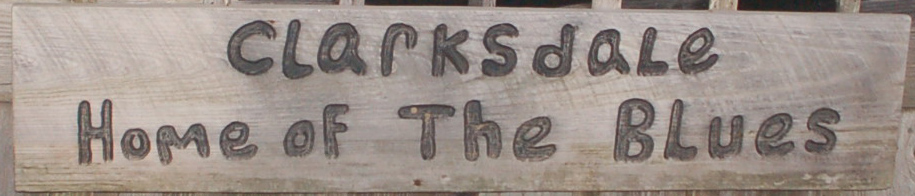
Clarksdale illustrates the contrasting nature of the Mississippi Delta. It is a fascinating community. Clarksdale can legitimately make some claim to being the Home of the Blues. Surely the blues originated in the Delta and Clarksdale is right in the middle of it, probably the most prominent community. The music is amazing. The town practically drips in history. One of folks at Cathead once told me, “What this town needs is a place to get a meal and a drink without live music.”
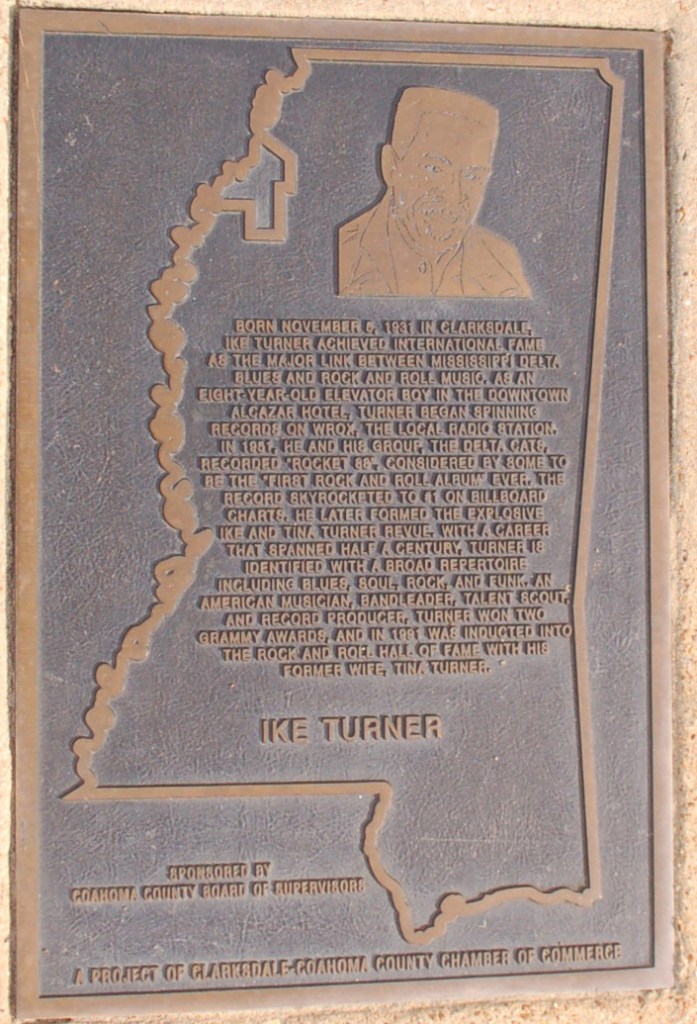
The pathway to the Delta Blues Museum contains a plaque honoring local son Ike Turner, who can be justifiably credited with recording the first rock and roll record. When they arrived at Sun Studio in nearby Memphis, Turner and his bandmates discovered a torn speaker. This resulted in a unique sound on their recording of Rocket 88. The song rocketed to the top of the charts. The plaque makes no mention of Turner’s abuse of his wife Tina.
I stopped in the unique Cathead Records, bought a few souvenirs, and encountered Bubba O’Keefe, the executive director of Visit Clarksdale.
https://www.visitclarksdale.com/
He was leading a tour of a group of travel writers from Germany and a religion reporter from the United Kingdom. We met up with the group later that night the world famous (really, no kidding.) Ground Zero Blues Club.
https://www.groundzerobluesclub.com/
There are music festivals by dozens. It seems that everyone in town plays some instrument or another, many starting when they were children. It was open mic night and one of the performers was thrilled to be there. He had come all the way from California to live out his dream of playing Crossroads within sight of the actual Crossroads.
Then there is the part of Clarksdale that they would prefer you do not see.
Bubba could hardly have been more gracious. He thanked us for coming down, complimented our work, comisserated with the ups and downs we have witnessed over the years, and asked us to please come back. In his job of promoting Clarksdale, he has no illusions of the difficulties that presents and the drawbacks of the community.
That’s the thing about Clarksdale. There are a lot of weathered and worn buildings. You can never tell whether they are quaint and supposed to look that way or if they are just old and weathered and worn down.
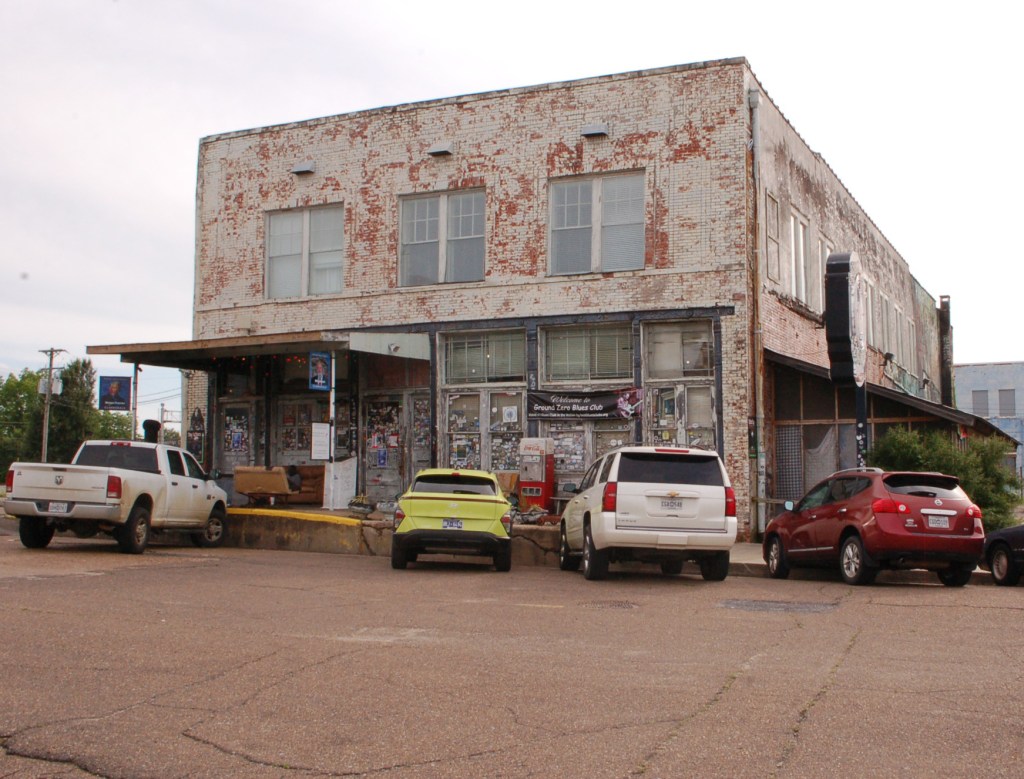
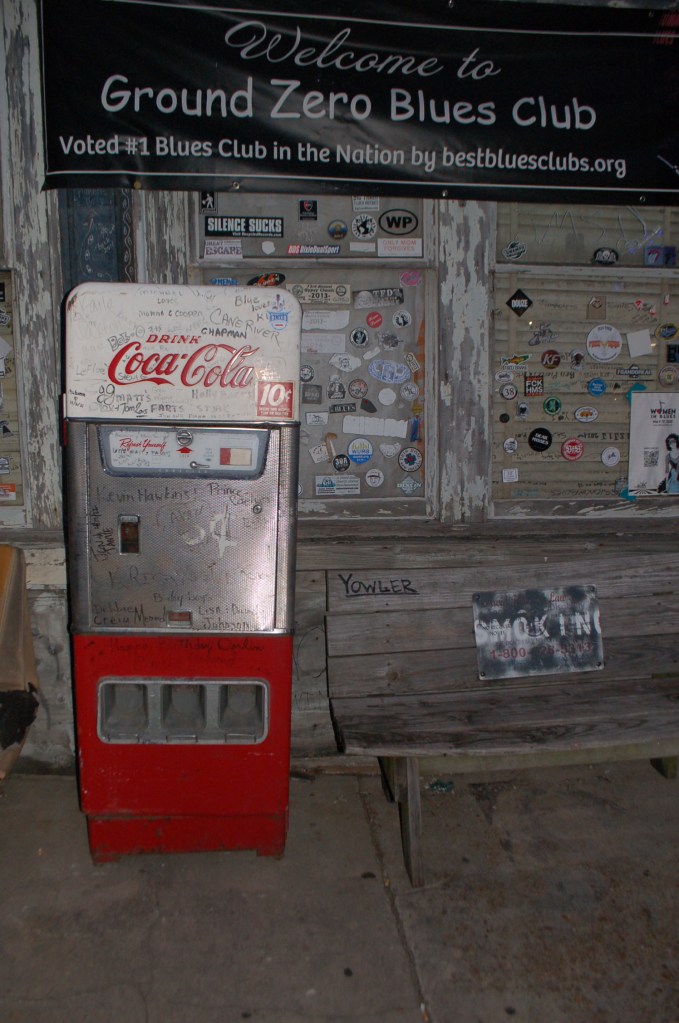
We have met and talked to some of the people who rebuilt what is now Ground Zero. It had previously been, among other things, a cotton warehouse and a car dealership. When the current owners bought the building, they pretty much gutted it, built apartments upstairs and opened up the club. It really does look like a genuine Mississippi juke joint. During my trips down here, we have not visited one of the other famous clubs in town which really does look like it is falling down and where our team leader was once propositioned by one of the local working women.
Across the street from Ground Zero stands, or stood, the Blues Alley Blues Club. It is notable for the painted Cadillac parked in the front which serves as a sort of rolling billboard. But the club is not doing great. As a matter of fact, it burned down recently. It seems that Clarksdale has had some trouble lately with buildings burning down. Could be a combination of old buildings, limited fire protection resources, and bad luck. Could be something more sinister.

But on the other hand, there are all those warm and talented people. Dino is a veteran on this crew and has gotten to know plenty of people. We encountered a couple of the town regulars, Lee and Big A. They and Dino greeted each other like old friends, which in fact they are.
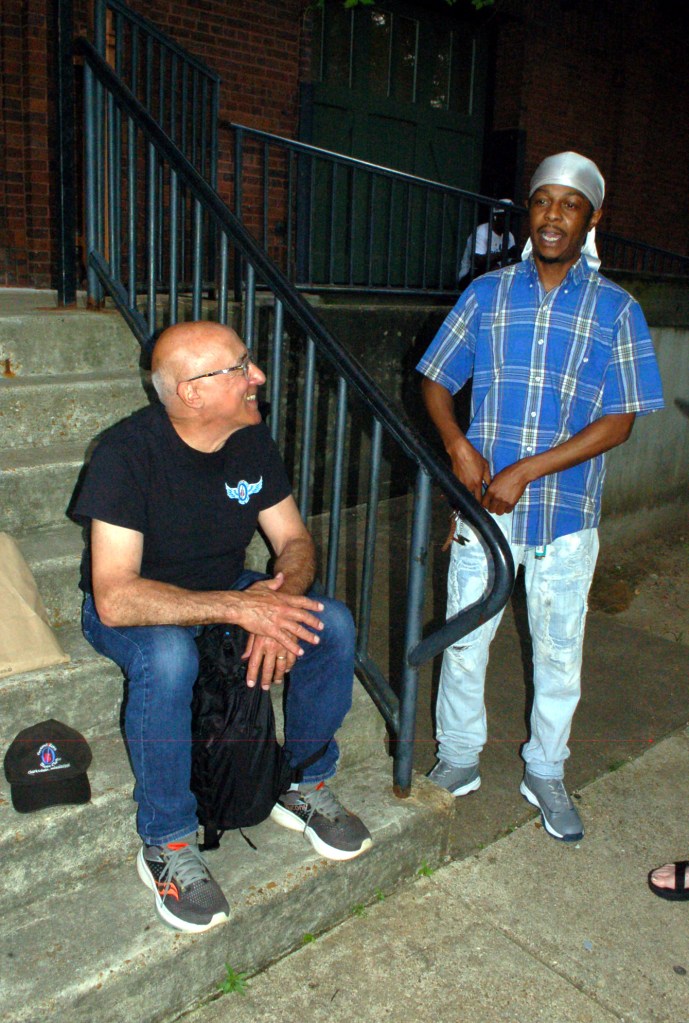
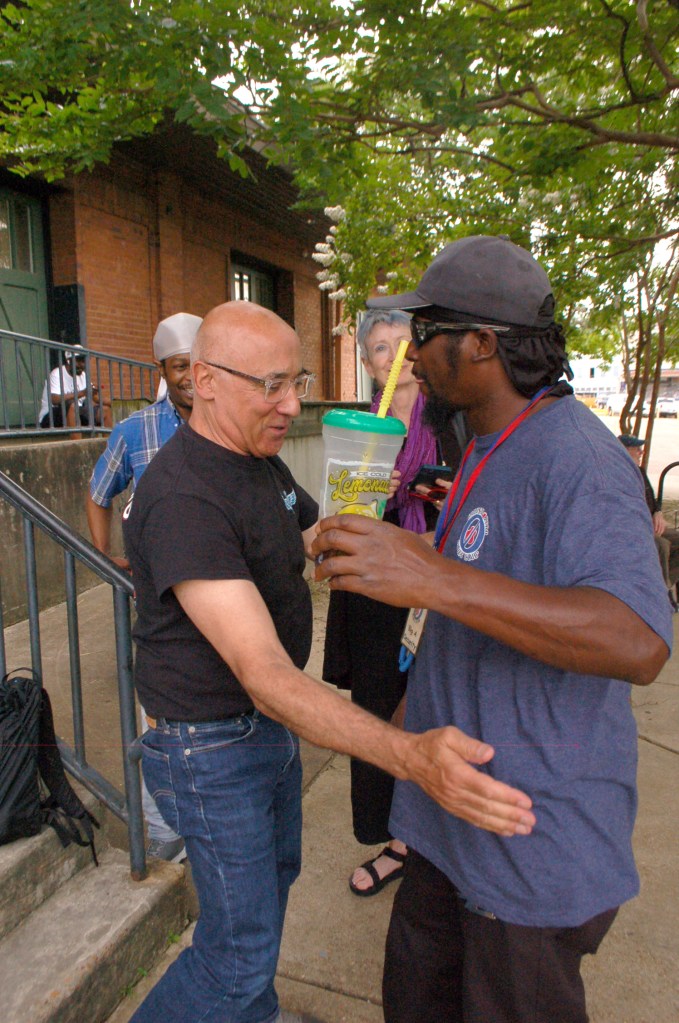
Turns out that they will be visiting our area as part of Morgan Freeman’s Symphonic Blues Experience August 1 at Ravinia Festival. A bunch of us will be showing up. They are going to be on a tour of the U.S. and Canada, playing with symphony orchestras, including the amazing Chicago Symphony Orchestra!
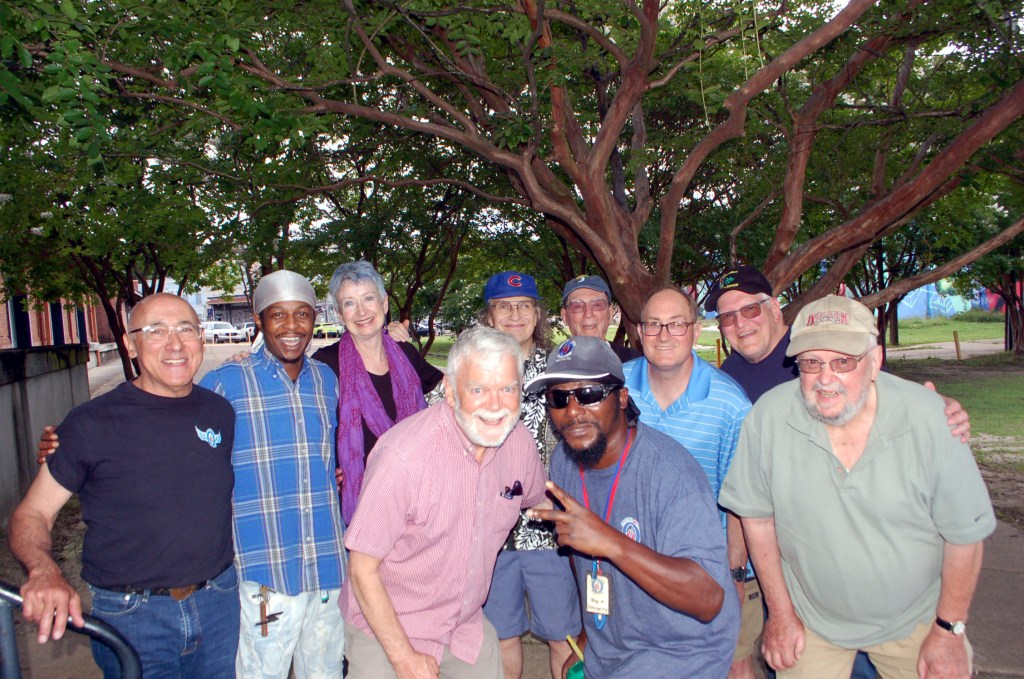
So things continue to go up and down in the delta. If you look around, you can see so much talent, so much potential for things to go right, so many people we have grown to know and love. And so much poverty, so many missed opportunities, so much of the dark side of our society. And we keep coming back.

 hammerininthedelta.blog
Leave a comment