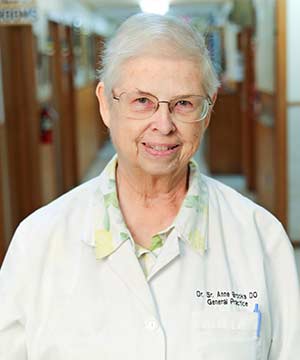
A few of us went to the clinic for a tour. Well, it was not much of a tour. Cindy the office manager showed us a few rooms and then regaled us for an hour or so with stories of Sister Anne.
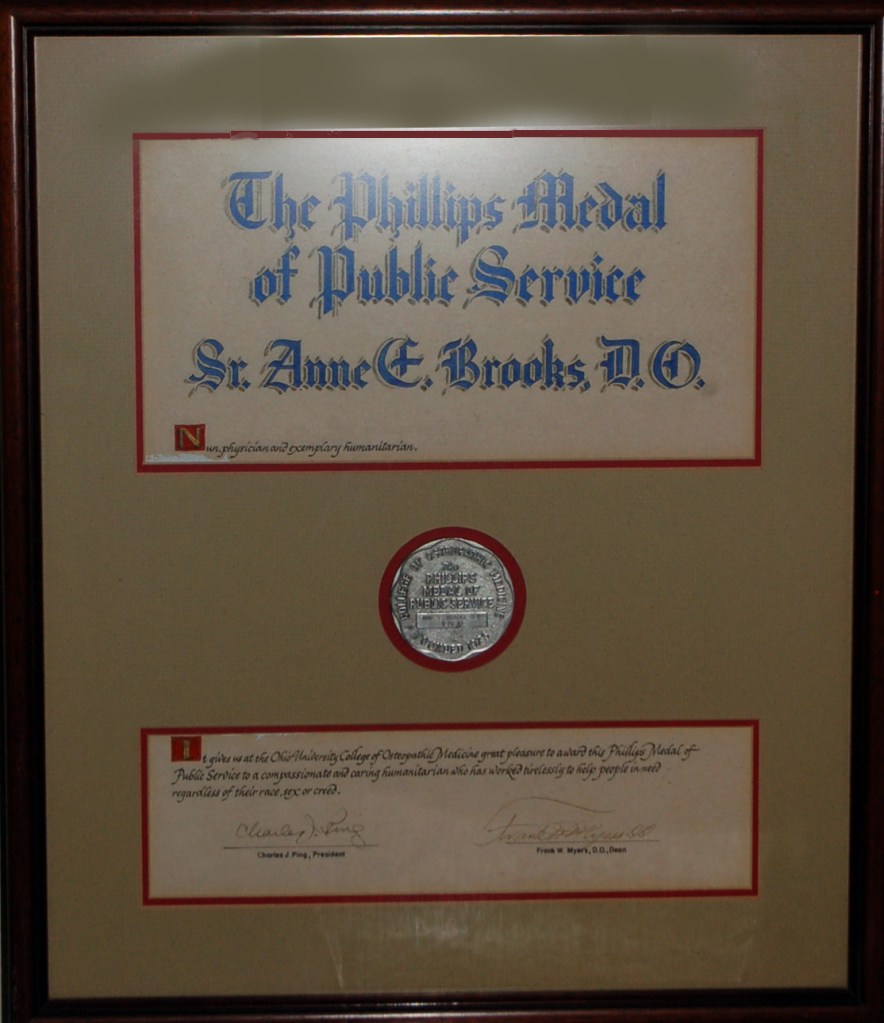
Just about everything we are doing and that most anybody is doing around here began when Dr. Sr. Anne Brooks, DO, SNJM came down to the clinic. Sister Anne’s story began well before she entered medical school at the age of 40 or so, but that is a story for another day. She needed to find an underserved community to work in to pay off her government loans, which is not that big a stretch for a nun. Most such people stay a year or two. She stayed 35.
Sr. Anne wrote to lots of small towns in the delta and only Tutwiler replied. She showed up and found that the town had a clinic. She told us once, “They didn’t tell me they had a clinic and I didn’t tell them I was a nun.” In a short time, one small room of the clinic became the community center, with after school care in the afternoon, followed by adult literacy classes at night. Those started when Sr. Anne discovered that some of her patients could not read the labels on the medication she gave them. The Habitat program began after a woman arrived at the clinic with a serious leg injury when she fell through her livingroom floor.
All of these activities kept one nun way too busy, so Sr. Anne invited her friend Sr. Maureen down. Sr. Maureen was another force of nature and got lots of things moving at the community center. Then one day a 60 Minutes TV crew came down. I asked Cindy what brought them there.
“Nobody knows! We have tried to figure that out and nobody seems to know. But after 60 Minutes, the donations started rolling in. They had to hire seven temporary workers at the post office. They we bringing piles of mail over, with money falling out. Kids sent their lunch money. Some people sent a dollar. Some people sent fifty thousand dollars.”
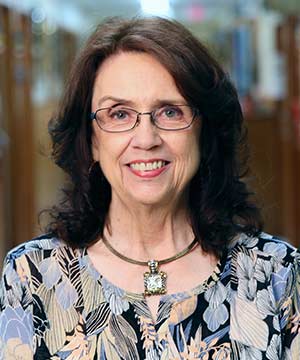
I took a picture of Cindy at the clinic, but I will be nice and use this one from the clinic website instead.
Thus began the Tutwiler Quilters and the other things that the TCEC provided. The TCEC has expanded. 60 Minutes did a show comemorating one of its anniversaries and showed a clip of the previous piece and an update. More donations rolled in. There were lots of activities for young people. A sign on the wall listed consequences for bad behavior, ultimately leading to a talk with Sr. Maureen. Those of us who are veterans of Catholic education know that was not something to be taken lightly.
Since Sr. Maureen left to become the head of her order, management has changed multiple times, and recent conflicts with the board of directors lead to the departure of the last director. Different people have different ideas about whose fault that was, but for the present, the center does not have a director or much programming.
Things go up and down here, but much has improved since Sr. Anne first arrived in 1983. She used to meet with us nearly every year when we made the trip, and told us once that the first thing she did when she took over was to close the Colored waiting room. “That’s right,” Cindy confirmed. “The bathrooms too.” She also told us that some of the houses did not have running water. Mississippi did not require it at the time. When the state finally required indoor plumbing (stand pipes, not sinks) waterborne diseases declined by about 90%. Sr. Anne used to tell us that building houses was health care work. “When people have a house, they think they are worth something. They start taking better care of themselves.”
By the time I made my first trip here, Sr. Anne was nearing or at retirement age, but kept working. Originally the town rented the clinic to her for a dollar a year, but eventually the bookkeeping got to be a nuisance, so they just gave it to her. She kept looking far and wide for someone who would take over the clinic and run it to her expectations. Finally the director of the Tallahatchie General Hospital expressed interest and showed up to a board meeting.
“He had just returned from a mission trip with his teenage children. He sat right there in that red chair. She had looked all over for someone to take the clinic over. Catholic Charities, Lutheran Social Services, all sorts of people. As he spoke you could just see her light up. She finally found someone who would take over the clinic and have it run the way she wanted. “
The clinic is now run by a non-profit trust under the direction of the hospital. Cindy claims that finding doctors is not difficult. “They actually like it. They come in and we supply the patients. We do all the paperwork and file all the insurance. Anything that is not covered by insurance the clinic covers.”
Donations paid for several expansions of the clinic, but the building has just about reached its limits. As a result of a sizeable bequest, a new clinic is being built nearby. The old building will probably eventually revert to the town.
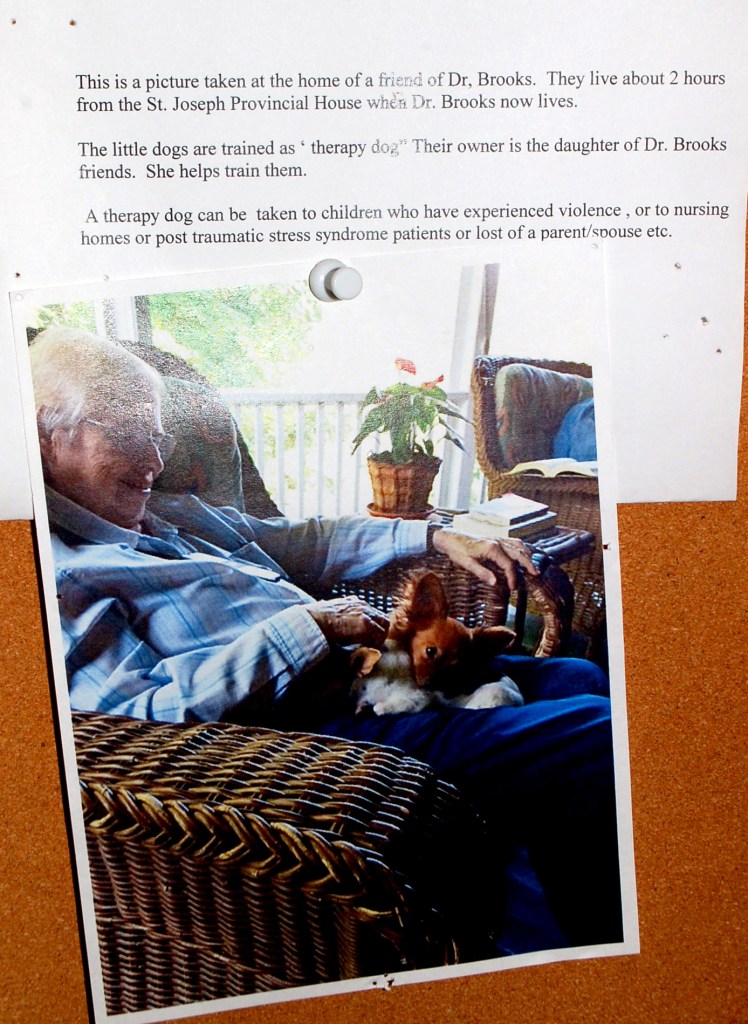
Sister Anne hung on about as long as she could. As soon as the hospital took over the clinic, she retired to her order’s retirement home in upstate New York. Jan Nowak, one of our former regulars is a pathologist and developed a good working relationship with her over the years. Shortly after she retired, Jan accepted a position at Rochester University, which put him and his wife close to where Sister Anne was living. They came for a visit. She had declined significantly and could hardly recognize them.
“She’s suffering from dementia. There are two things she knows. She knows that she is a doctor. And she knows that she is a bride of Jesus.”



 hammerininthedelta.blog
Leave a comment